
 I have as friends in Stockholm two people, physicians, who are educated in psychopharmacology and other neurosciences—father and daughter, Vasil and Jeanette. They are reading this currently best-selling book, which they will lend to me when they finish reading it: “How to Change Your Mind: What the New Science of Psychedelics Teaches Us About Consciousness, Dying, Addiction, Depression, and Transcendence,” by Michael Pollan.
[Note: I am not recommending that the reader, or anyone, take the drugs described here. I am not proselytizing as did Timothy Leary. This is merely a factual presentation.]
 The book’s subject is about the clinical use of the psychedelics LSD (Lysergic acid Diethylamide) and psilocybin, found in 200 species of “magic mushrooms.”
“Pollan sifts the historical record to separate the truth about these mysterious drugs from the myths that have surrounded them since the 1960s, when a handful of psychedelic evangelists inadvertently catalyzed a powerful backlash against what was then a promising field of research.” (Source)
One of the “evangelists” referred to above was Timothy Leary:
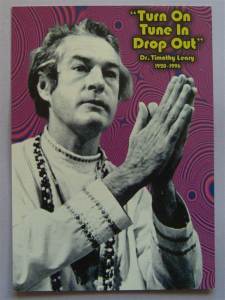 As a clinical psychologist at Harvard University, Leary conducted experiments under the Harvard Psilocybin Project in 1960–62 (LSD and psilocybin were still legal in the United States at the time) … The scientific legitimacy and ethics of his research were questioned by other Harvard faculty because he took psychedelics together with research subjects and pressured students in his class to take psychedelics in the research studies. Leary and his colleague, Richard Alpert (who later became known as Ram Dass), were fired from Harvard University in May 1963…
Leary believed that LSD showed potential for therapeutic use in psychiatry. He used LSD himself and developed a philosophy of mind expansion and personal truth through LSD. After leaving Harvard, he continued to publicly promote the use of psychedelic drugs and became a well-known figure of the counterculture of the 1960s. He popularized catchphrases that promoted his philosophy, such as “turn on, tune in, drop out”, “set and setting”, and “think for yourself and question authority”.
 Leary also wrote and spoke frequently about transhumanist concepts involving space migration, intelligence increase, and life extension (SMI²LE) … He gave lectures, occasionally billing himself as a “performing philosopher.” During the 1960s and 1970s, he was arrested often enough to see the inside of 36 prisons worldwide. President Richard Nixon once described Leary as “the most dangerous man in America”.[Source]
LSD was introduced as a commercial medication under the trade-name Delysid for various psychiatric uses in 1947. It was brought to the attention of the United States in 1949 by Sandoz Laboratories. Throughout the 1950s, mainstream media reported on research into LSD and its growing use in psychiatry, and undergraduate psychology students taking LSD as part of their education described the effects of the drug. Time magazine published six positive reports on LSD between 1954 and 1959.
 By the mid-1950s, LSD research was being conducted in major American medical centers, where researchers used LSD as a means of temporarily replicating the effects of mental illness. One of the leading authorities on LSD during the 1950s in the United States was the psychoanalyst Sidney Cohen. Cohen first took the drug on October 12, 1955 and expected to have an unpleasant trip, but was surprised when he experienced “no confused, disoriented delirium.” He reported that the “problems and strivings, the worries and frustrations of everyday life vanished; in their place was a majestic, sunlit, heavenly inner quietude.”
 Cohen immediately began his own experiments with LSD with the help of Aldous Huxley whom he had met in 1955. In 1957, with the help of psychologist Betty Eisner, Cohen began experimenting on whether or not LSD might have a helpful effect in facilitating psychotherapy, curing alcoholism, and enhancing creativity. Between 1957 and 1958, they treated 22 patients who suffered from minor personality disorders. LSD was also given to artists in order to track their mental deterioration, but Huxley believed LSD might enhance their creativity. Between 1958 and 1962, psychiatrist Oscar Janiger tested LSD on more than 100 painters, writers, and composers.
—
HERE IS A RARE FILM: Dr. Cohen interviews a subject who has volunteered to take LSD.
—
 Sandoz halted LSD production in August 1965 after growing governmental protests at its proliferation among the general populace. The National Institute of Mental Health in the United States distributed LSD on a limited basis for scientific research. Scientific study of LSD largely ceased by about 1980 as research funding declined, and governments became wary of permitting such research, fearing that the results of the research might encourage illicit LSD use. By the end of the 20th century, there were few authorized researchers left, and their efforts were mostly directed towards establishing approved protocols for further work with LSD in easing the suffering of the dying and with drug addicts and alcoholics. (Source)
 The Doors of Perception is a book by Aldous Huxley. Published in 1954, it elaborates on his psychedelic experience under the influence of mescaline in May 1953. Huxley recalls the insights he experienced, ranging from the “purely aesthetic” to “sacramental vision”,[1] and reflects on their philosophical and psychological implications. In 1956, he published Heaven and Hell, another essay which elaborates these reflections further. The two works have since often been published together as one book; the title of both comes from William Blake‘s 1793 book The Marriage of Heaven and Hell.
The Doors of Perception provoked strong reactions for its evaluation of psychedelic drugs as facilitators of mystical  insight with great potential benefits for science, art, and religion. While many found the argument compelling, others including writer Thomas Mann, Vedantic monk Swami Prabhavananda, philosopher Martin Buber and scholar Robert Charles Zaehner countered that the effects of mescaline are subjective and should not be conflated with objective religious mysticism. Huxley himself continued to take psychedelics until his death and adjusted his understanding, which also impacted his 1962 final novel Island. (Source)

Jim Morrison, 1969
The Doors were an American rock band formed in Los Angeles in 1965, with vocalist Jim Morrison, keyboardist Ray Manzarek, guitarist Robby Krieger, and drummer John Densmore. They were among the most controversial and influential rock acts of the 1960s, mostly because of Morrison’s lyrics and his erratic stage persona, and the group was widely regarded as representative of the era’s counterculture. The band took its name from the title of Aldous Huxley‘s book The Doors of Perception, itself a reference to a quote by William Blake. “If the doors of perception were cleansed,” he once wrote, “everything would appear to man as it is, infinite.”




 The Pavellas Perspective