
Quick! Think of all the big islands in the world.
Is Australia an Island? No, it’s a continent. How do we know this? It’s just a matter of definition.
Conventionally, “continents are understood to be large, continuous, discrete masses of land, ideally separated by expanses of water…” The criterion “large” leads to arbitrary classification: Greenland, with a surface area of 836,330 square miles is considered the world’s largest island, while Australia, at 2,941,300 square miles is deemed a continent… (Source).
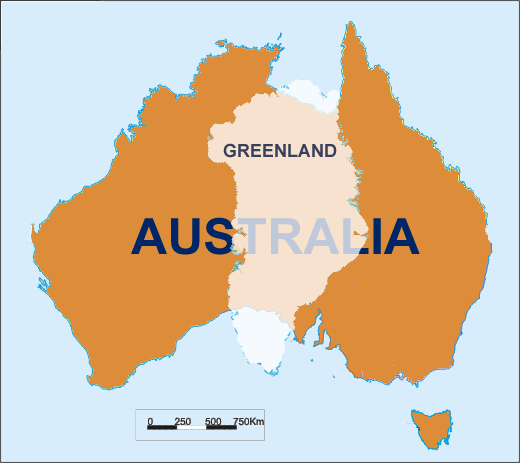
Wikimedia Commons
So now we know that, by definition, Greenland is the world’s largest island. But even this may not be correct, in that: “If the ice disappeared, Greenland would most probably appear as an archipelago, at least until isostasy lifted the land surface above sea level once again.” (Source). But let’s not quibble over probabilities.
The next two largest islands are neighbors in the area generally bounded by the Indian Ocean and the South Pacific: New Guinea (#2) and Borneo (#3). Between them is the eleventh largest island, Sulawesi.
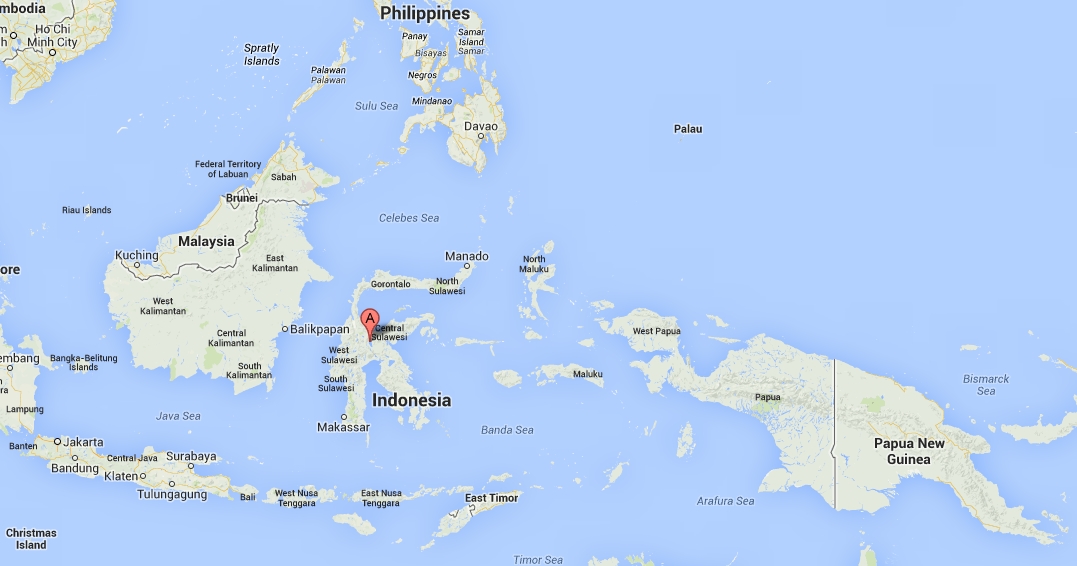
The orange bubble labeled ‘A’ denotes the Island of Sulawesi, part of the nation of Indonesia. The Island of Borneo is to the left of Sulawesi, and the Island of New Guinea is to its right. The latter two islands are divided politically among two or more separate nations: Brunei , Indonesia, Malaysia, and Papua-New Guinea.
- There are approximately 180,497 islands in the world. (Source).
- What minimum size constitutes an island? One square mile. (Source).
Madagascar is the fourth largest island in the world, in the Indian Ocean off the eastern coast of southern Africa. It has a total area of 226,660 square miles, with 224,530 square miles of land and 2,100 square miles of water. Madagascar originated as part of the Gondwana supercontinent. Its west coast was formed when Africa broke off from Gondwana around 165 million years ago. Madagascar eventually broke off from India about 66 million years ago.
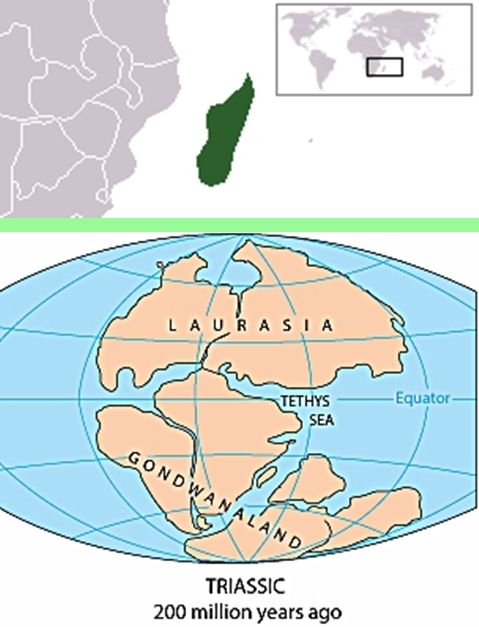
Wikimedia
Baffin Island is the largest island in Canada and the fifth largest island in the world. Its area is 195,928 square miles and its population is about 11,000 (2007 estimate). Named after English explorer William Baffin, it is likely that the island was known to Pre-Columbian Norse explorers from Greenland and Iceland and may be the location of Helluland, spoken of in the Icelandic sagas (the Grœnlendinga saga and the Saga of Erik the Red). (Source).
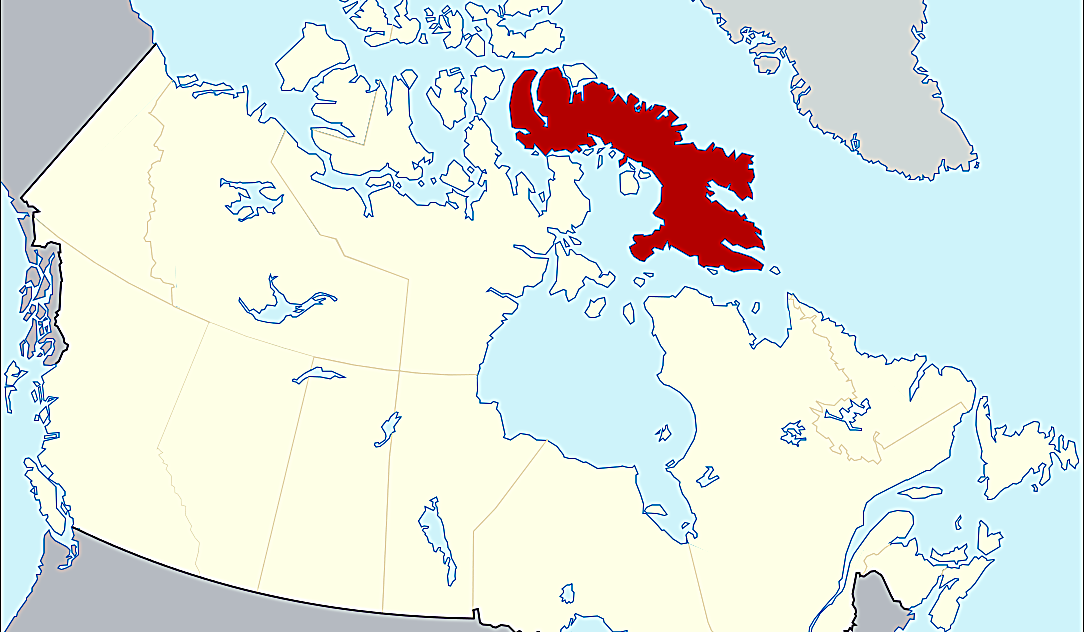
Baffin Island, in red (Wikipeida)
Sumatra is an island in western Indonesia, to the west of the Sunda Islands. It is the largest island that is entirely in Indonesia (two larger islands, Borneo and New Guinea, are shared between Indonesia and other countries) and the sixth largest island in the world at 182,812 square miles with a current population of almost 50 million. (Source).
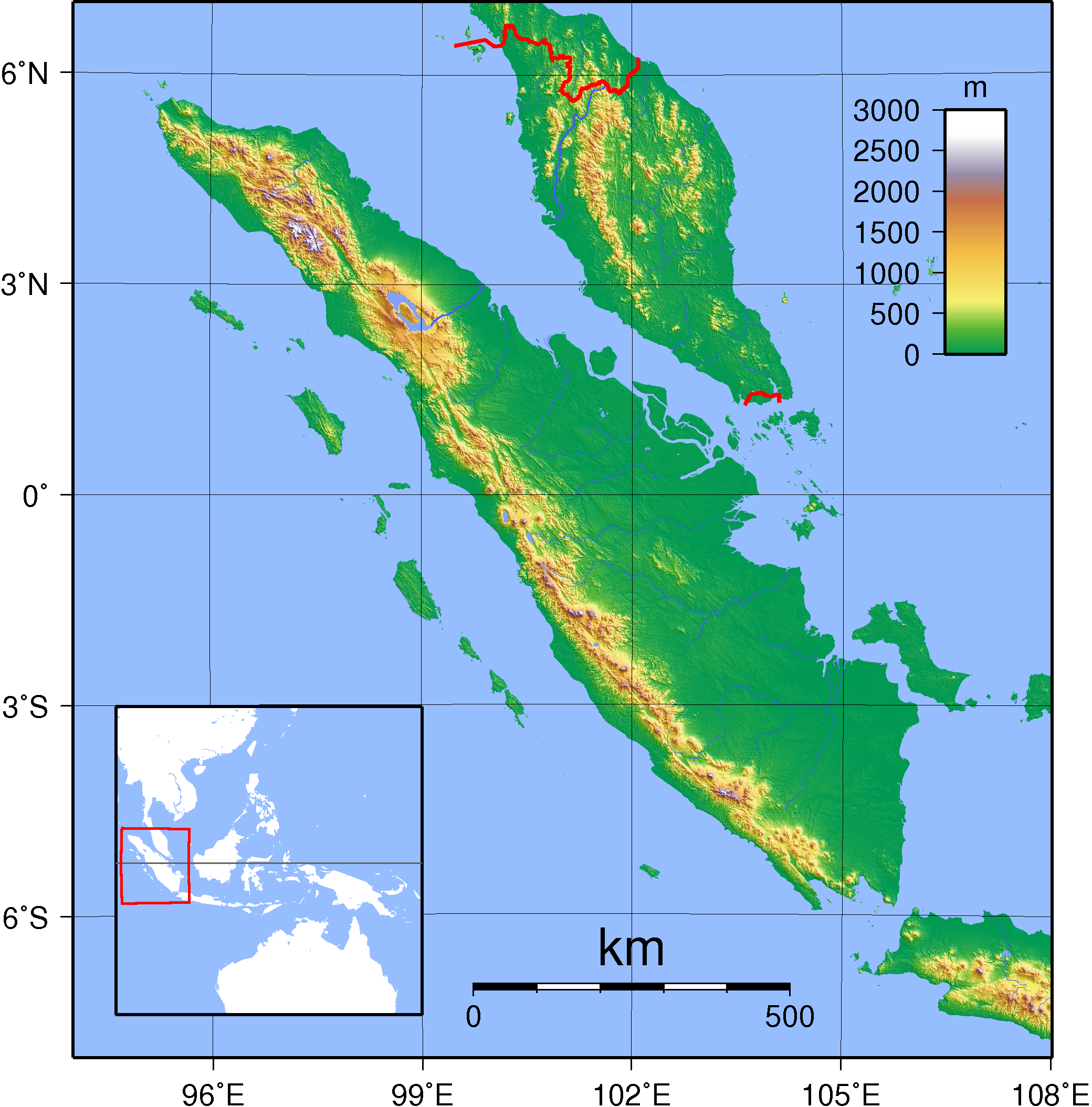
Wikimedia Commons
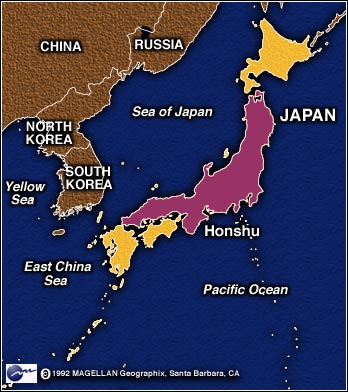
Honshu is the largest and most populous island of Japan. It is the seventh largest island in the world, and the second most populous after Java. It had a population of 103 million in 2005, mostly in the Kantō plain where 25% of the total population reside in the Greater Tokyo Area. The island’s total area is 88,016.85 square miles, 60% of the total area of Japan. It is slightly larger than Great Britain. Its area has been expanding with land reclamation and coastal uplift in the north, but global sea level rise has diminished these effects. The highest peak is the active volcano Mount Fuji at 12,388 feet, which makes it the world’s 7th highest island.
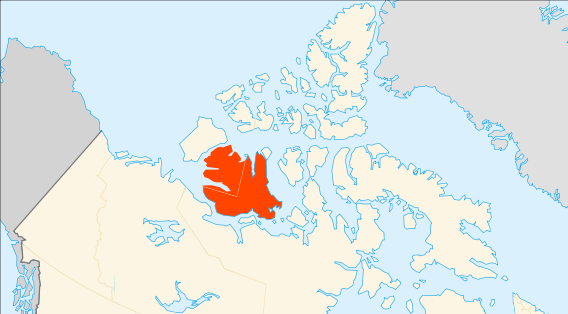
Victoria Island is an island in the Canadian Arctic Archipelago. It is the eighth largest island in the world, and at 83,897 square miles is Canada’s second largest island. It is slightly larger than the island of Great Britain. It contains the world’s largest island within an island within an island.
Great Britain, also known as Britain, is an island in the Atlantic Ocean, off the north-western coast of continental Europe. It is the ninth largest island in the world and the largest island in Europe. With a population of about 62 million people in mid-2010, it is the third most populous island in the world, after Java (Indonesia) and Honshū (Japan). It is surrounded by over 1,000 smaller islands and islets. The island of Ireland lies to its west. The island is part of the sovereign state of the United Kingdom of Great Britain and Northern Ireland, constituting most of its territory: most of England, Scotland and Wales are on the island of Great Britain.

Ellesmere Island (Inuit: Umingmak Nuna, meaning “land of Muskox“)is part of the Qikiqtaaluk Region of the Canadian territory of Nunavut. It comprises an area of 75,767 square miles, making it the world’s tenth largest island and Canada’s third largest island. Vikings from the Greenland colonies reached Ellesmere Island, Skraeling Island and Ruin Island during hunting expeditions and trading with the Inuit groups. Unusual structures on Bache peninsula may be the remains of a late-period Dorset stone longhouse.

Ellesmere Island is at the Northernmost part of Canada
Government of Canada: “Natural resources Canada.”
- Devon Island, just south of Ellesmere Island, at 21,331square miles, is the 27th largest island in the world, and the largest uninhabited island in the world. The entire planet’s population could fit on this island, at densities of the most densely populated part of Earth, Lalbagh, Dhaka as of the 2011 census figures there. (Wikipedia).
I’ve mentioned the 11th largest island, Sulawesi, so here are the rest on the list of the top 300, after which the sizes diminish more precipitously. The 300th largest island is Melchor Island, Chile, with 333 square miles.
|
|
|||
|
Rank |
Island’s name |
Area (sq mi) |
Country(s) |
|
12 |
South Island |
56,308 |
New Zealand |
|
13 |
Java |
53,589 |
Indonesia |
|
14 |
North Island |
43,082 |
New Zealand |
|
15 |
Luzon |
42,458 |
Philippines |
|
16 |
Newfoundland |
42,031 |
Canada |
|
17 |
Cuba (main island) |
40,369 |
Cuba |
|
18 |
Iceland (main island) |
39,315 |
Iceland |
|
19 |
Mindanao |
36,657 |
Philippines |
|
20 |
Ireland |
32,595 |
Republic of Ireland; Northern (Great Britain) |
|
21 |
Hokkaido |
30,394 |
Japan |
|
22 |
Hispaniola |
28,544 |
Dominican Republic; Haiti |
|
23 |
Sakhalin |
27,989 |
Russia |
|
24 |
Banks Island |
27,038 |
Canada |
|
25 |
Sri Lanka (main island) |
25,200 |
Sri Lanka |
|
26 |
Tasmania (main island) |
25,105 |
Australia |
|
27 |
Devon Island |
21,331 |
Canada |
|
28 |
Alexander Island |
18,946 |
None (Antarctic) |
|
29 |
Isla Grande de Tierra del Fuego |
18,302 |
Argentina; Chile |
|
30 |
Severny Island |
18,177 |
Russia |
You might ask, “where do most of the top 300 islands reside?” Here you are:
|
49 |
Indonesia |
|
45 |
Canada |
|
27 |
Russia |
|
23 |
United States |
| 17-Alaska | |
| 4-Hawaii | |
| 1-Long Island, New York | |
| 1-Puerto Rico | |
|
17 |
Antarctica |
|
15 |
Philippines |
|
8 |
Chile |
|
8 |
Greenland |
|
8 |
Papua New Guinea |
|
7 |
Australia |
|
6 |
Solomon Islands |
|
5 |
Brazil |
|
5 |
Norway |
|
5 |
United Kingdom |
|
4 |
Japan |
|
4 |
Spain |
|
3 |
Bahamas |
|
3 |
Denmark |
|
3 |
Greece |
|
3 |
New Zealand |
|
248 |
Total |
- Finally, these 300 islands comprise 2.5% of the Earth’s land surface.

 The Pavellas Perspective