
“… I love you with all my heart, and pray for the continuance of your life until you should be tired of it yourself.”
Thus ends the letter of 15 August 1820 from Thomas Jefferson to John Adams, the men having achieved, respectively, the ages of 77 and 85. They had not quite another six years to live and died on the same day, exactly 50 years after they had signed the Declaration of Independence from Great Britain.
Jefferson’s effusive salutation is remarkable in two ways, at least. Jefferson was ever the withdrawn, introverted, land wealthy (and cash poor) statesman of both the Colony and the State of Virginia who usually wrote from his head after much deliberation; whereas, Adams was the loquacious, argumentative and extroverted farmer-lawyer of Massachusetts who wrote from the heart quite freely.
Also, the depth of their affection for each other this late in their lives belies the severe break in relations that resulted in a hiatus of over eight years in their correspondence, between 1804 and 1812.

“…we ought not to die before we have explained ourselves to each other.”—Jefferson to Adams
This is my second writing about the treasure these men left us in their letters between years 1777 and 1826. My article of 3 February 2010 covered the letters in a general way. Today’s article presents what both saw as an enemy of a democratic republic, the aristocracy, but they never fully agreed on a remedy or how to prevent its ascendancy.
They first discussed this subject while both were diplomats; Adams represented the new United States of America in London (1785 -1788) and Jefferson, similarly, in Paris (1784 – 1789). Jefferson visited Adams at the British Embassy of the USA, commonly called, then and now, Grosvenor Square, London.
(From JA to TJ, 1 Mar 1787): A work upon the subject you mention, nobility in general [i.e., the aristocracy], which I once hinted to you a wish to see handled at large would… require many books which I have not, and a more critical knowledge both of ancient and modern languages than at my age a man can aspire to. There are but two circumstances, which will be regretted by me, when I leave Europe. One is the opportunity of searching any questions of this kind, in any books [in England and France] that may be wanted, and the other will be the interruption of that intimate correspondence with you, which is one of the most agreeable events in my life.
Twenty-six years later, the two began an intense correspondence on the subject that lasted one and one-half years.
(JA to TJ, 9 July 1813): I recollect, near 30 years ago to have said carelessly to you, that I wished I could find time and means to write something upon aristocracy…I soon began, and have been writing upon that subject ever since…Your “άριστοι” [“aristoi—aristocrats”] are the most difficult animals to manage…They will not suffer themselves to be governed. They not only exert all their own subtle industry and courage, but they employ the commonality, to knock to pieces every plan and model that the most honest architects in legislation can invent to keep them within bounds…But who are these “άριστοι”? Who shall judge? Who shall select these choice spirits from the rest of the congregation? Themselves? We must first find out and determine who themselves are. Shall the congregation choose? Ask Xenophon…[who] says that the ecclesia [popular assembly] always chooses the worst men they can find because none others will do their dirty work. This wicked motive is worse than birth or wealth.
Here I want to quote Greek again…[from] a collection of moral sentences from all the most ancient Greek poets. In one.. [is] a couplet the sense of which was “Nobility in men is worth as much as it is in horses, assess, or rams: but the meanest blooded puppy in the world, if he begets a little money, is as good a man as the best of them.” Yet birth and wealth together have prevailed over virtue and talents in all ages. The many will acknowledge no other “άριστοι”.
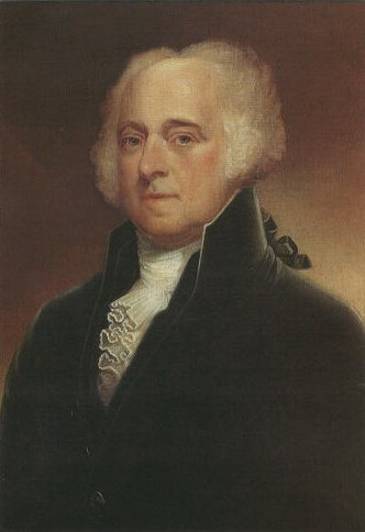
“Your distinction between natural and artificial aristocracy does not appear to me as well founded.”—Adams to Jefferson
So began five letters from Adams to Jefferson before the latter sent a lengthy and famous response to Adams on the subject of the aristocracy, after which Adams wrote a final letter, the beginning of which states: “We are now explicitly agreed, in one important point, viz. that ‘there is a natural aristocracy among men, the grounds of which are virtue and talents.’ ”
But where did they differ? This will be discussed, further below.
First, we must look at what these men meant by The Aristoi, an ancient Greek construction with which they were familiar as scholars in the writings and philosophies of that time. Immediately below are excerpts from two sources to give us a grounding in what these men were discussing.
Arete and the Aristoi
Arete…means goodness, excellence, or virtue of any kind. In its earliest appearance in Greek, this notion of excellence was ultimately bound up with the notion of the fulfillment of purpose or function: the act of living up to one’s full potential. Arete in ancient Greek culture was courage and strength in the face of adversity and it was to what all people aspired. [Source]
The concept of arete, or excellence, was one of the Homeric Age’s most important contributions to Western culture…(T)he nobility is the prime mover in forming a nation’s culture, and…the aristoi, or “the best,” are responsible for the creation of a definite idea of human perfection, an ideal toward which they are constantly educated. Arete became the “quintessence of early aristocratic education,” and thereafter the dominant concept in all Greek education and culture; it has remained with us as an educational ideal ever since.
It was not possible to separate leadership from arete, the Greeks believed, because unusual or exceptional prowess was a natural manifestation of leadership. Since each man was ranked in accordance with his ability, arete became an ideal of self-fulfillment or self-realization in terms of human excellence. A noble’s arete, in Homer, is specifically indicated by his skill and prowess as a soldier in war, and as an athlete in peace. War provides the occasion for the display of arete and the winning of kleos, or glory. The aristoi compete among themselves “always to be the best and to be superior to others.” [Source: thinkquest]
Definitions of Monarchy, Aristocracy and Democracy in Modern Times, from a paper by Paul Lucardie, then at the University of Groningen, Netherlands, to give us a current context in which to understand our subject [Please click on the table to be able to read it]:

The Letters Between Adams and Jefferson on the Aristocracy
Adams wrote to Jefferson on 2 September 1813: “The five pillars of aristocracy are beauty, wealth, birth, genius and virtues. Any one of the first three can at any time overbear any one or both of the two last,” and goes on to give historical and contemporary examples.
Jefferson counters that he has faith in the enlightenment of men through science, and in the well-functioning democratic principles and machinery they and their fellow writers of the U.S. Constitution established, especially regarding regular elections:
Science is progressive, and talents and enterprise on the alert. Resort may be had to the people of the country, a more governable power from their principles and subordination; and rank, and birth, and tinsel-aristocracy will finally shrink into insignificance… (I)f the moral and physical conditions of our own citizens qualifies them to select the able and good for the direction of their government, with the recurrence of elections at such short periods as will enable them to displace an unfaithful servant before the mischief he mediates may become irredeemable.
The mostly formal style of their writing (Adams occasionally lapsed into a more familiar style) sometimes masks, for the modern eye, the fundamental disagreement between these statesmen on the issue. Adams was the Federalist, perceiving a strong federal (i.e., central) government as necessary to “control” the natural appetites of man toward power and privilege. He had no confidence that those with natural born talent (sometimes called “genius”) and “virtues,” derived through family traits and education, who ascended as “natural aristocracy” would not become as corrupt as those who ascended through wealth, beauty or name–the latter group being the “tinsel aristocracy” as described by Jefferson.
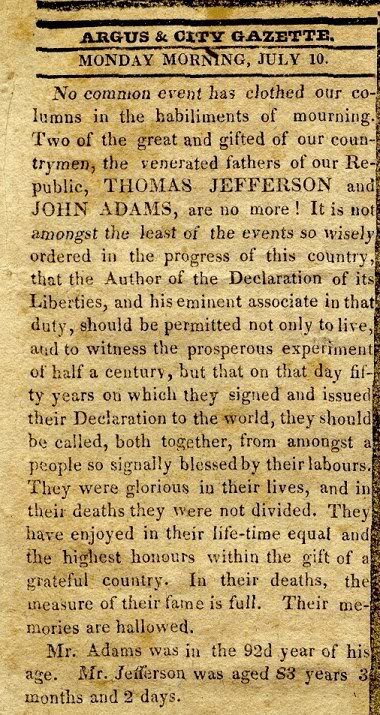
Obituary for John Adams and Thomas Jefferson (source: /media.photobucket.com)
Jefferson had faith in the common sense of the ordinary citizen to vote out the misbehaving elected officials before they could do irreparable damage. Further, he did not place as much importance on the doings of the central government, observing that the limitless frontier then offered by America made the enterprising man relatively independent of the aristocratic tendencies of those in power in the country’s capital.
[The text is not edited to conform with modern English usage] With respect to Aristocracy, we should further consider that, before the establishment of the American states, nothing was known to History but the Man of the old world, crouded within limits either small or overcharged, and steeped in the vices which that situation generates. A government adapted to such men would be one thing; but a very different one that for the Man of these states. Here every one may have land to labor for himself if he chuses; or, preferring the exercise of any other industry, may exact for it such compensation as not only to afford a comfortable subsistence, but where-with to provide for a cessation from labor in old age. Every one, by his property, or by his satisfactory situation, is interested in the support of law and order. And such men may safely and advantageously reserve to themselves a wholsome controul over their public affairs…
What is unstated by Jefferson in this correspondence is his underlying acceptance, perhaps even approval, of the occasional revolution to cleanse the ruling elite. Jefferson was enthusiastic about the French Revolution to which he was a direct witness, although he acknowledged that its latter stages went to bloody excess. This was a point of contention and public controversy between the Federalists and the Democratic-Republicans in the election of 1800 between Adams and Jefferson.
Jefferson famously wrote from Paris to William S. Smith on 13 November 1787:
We have had 13. states independent 11. years. There has been one rebellion. That comes to one rebellion in a century & a half for each state. What country before ever existed a century & half without a rebellion? & what country can preserve it’s liberties if their rulers are not warned from time to time that their people preserve the spirit of resistance? Let them take arms. The remedy is to set them right as to facts, pardon & pacify them. What signify a few lives lost in a century or two? The tree of liberty must be refreshed from time to time with the blood of patriots & tyrants. It is it’s natural manure.
There is much reference these days to the thoughts and intentions of the “founding fathers.” I suggest a reading of these letters would help us all truly understand where the founders stood on issues of freedom and liberty, government and democracy.
You can see all the letters (to everyone) of Thomas Jefferson here.
 Don’t worry—the heading for today’s article will be made clear, thanks to the superlative writing and expertise of
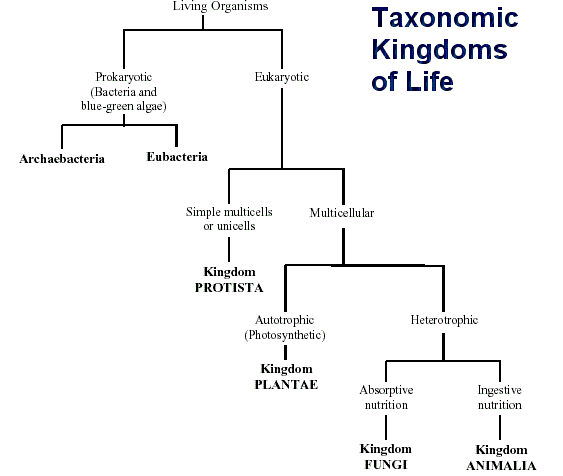 But, this is not all. The idea of species is now coming into question. I will let your reading of the book tell you why the difference between “lumpers” and “splitters” is important. Related to the competing views of those who “lump” and those who “split” is the notion that in using taxonomic schemes, we are tying to parse into units something that is continuous: the flow of connected living things through time and space.
 The Pavellas Perspective
