
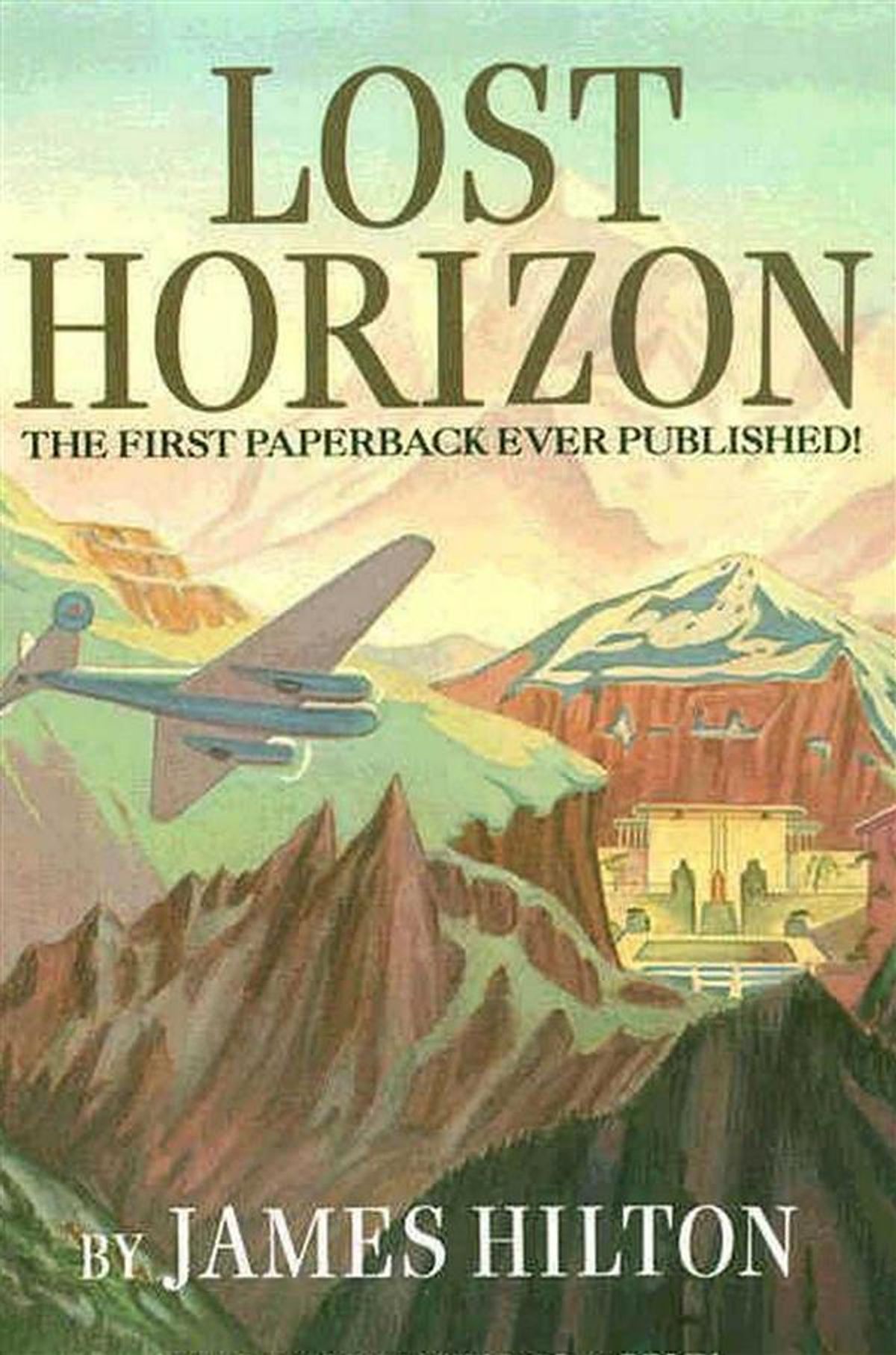
 Synchronicity is a concept originated by Carl G. Jung. A simple description of the concept, by a skeptic, reads: “meaningful coincidences”.
However defined and accepted, I cannot resist telling here of a string of possibly meaningful coincidences within the last few days, although the meaning, if any, eludes me.
I was out of reading material and was going out to lunch. I prefer to read while eating alone, thus accomplishing two enjoyable things within one measure of time. I was staying with my daughter and her family in California. I explored their bookcases and found, very handily, a copy of Lost Horizon by James Hilton.
This book was first published in 1933 and was released as a motion picture in 1937, the year of my birth (coincidence #1). The male star of the movie was Ronald Coleman, after whom my then 18-year-old mother named me (#2). I like the movie so much I have, within the last two years, purchased a DVD of it and have a CD recording of the movie’s music, by Dmitri Tiomkin, as well (#3?).
The movie was filmed in several locations, one of which was in the Ojai Valley where I once worked and lived.
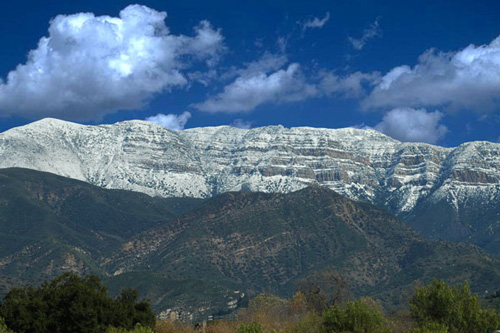
Topa Topa Bluffs, overlooking the Ojai Valley
On page 77 I was struck with a description by the male character ‘Chang’ of the governing philosophy of the Buddhist order in Shangri-La: “… our prevalent belief is in moderation. We inculcate the virtue of avoiding excess of all kinds–even including… the paradox of (avoiding an) excess of virtue itself… We rule with moderate strictness, and in return we are rewarded with moderate obedience. And I think I can claim our people are moderately sober, moderately chaste, and moderately honest.”
Reading this put me immediately in mind of the concept and practice of lagom in Sweden where I now live. “Moderation is best in all things” was also a favorite saying, in several forms, in the literature and philosophy (possibly Aristotle’s) of Ancient Greece where perhaps some of my ancestors then lived.
On Page 102 I was even more surprised to read of the female character Lo-Tsen playing, on a harpsichord, a Gavotte by Jean-Philippe Rameau. I had just purchased a CD of Rameau music expressly because of his Gavotte and Six Doubles I had heard on the car radio. The piece seems to be a set of variations on the theme of The Harmonious Blacksmith written in 1720 by George Frideric Handel . Rameau and Handel were exact contemporaries. Perhaps they both adapted their music from a third source.
Finally, a somewhat tenuous ‘coincidence’ is that of the mission of the lamasery of Shangri-La which similar to that of the fictional Albertian Order of St. Leibowitz in A Canticle for Leibowitz by Walter M. Miller, Jr. This is one of my favorite books, one that I have re-read within the past year. A further connection is the similarity of the author, Miller, to that of the main character in Lost Horizon, Conway. Miller wrote the book as a soulful exercise in expiating the emotional trauma he experienced in World War II, to put it quite simply and inadequately. The fictional Conway was forever changed due to his experiences in the First World War, thus making Shangri-La a perfect place for him for reasons you will read in the book.  The purpose of the “Albertian Order of St. Leibowitz” was to discover and preserve artifacts and written records of the time before the “Flame Deluge” of a future time that destroyed industrial civilization.
Conway, on the other hand, is told this by the High Lama of Shangri-La: “We have a dream and a mission…that first appeared to (our founder) as he lay dying in this room in 1789. He looked back then on his long life… and it seemed to him that all the loveliest things were transient and perishable, and that war, lust and brutality might some day crush them until there were no more left in the world . .. He saw the nations strengthening, not in wisdom, but in vulgar passions and the will to destroy; he saw their machine power multiplying until a single-weaponed man might have matched the whole army of the Grand Monarque [Louis XIV of France-RP]. He foresaw a time when men, exultant in the technique of homicide, would rage so hotly over the world that every precious thing would be in danger, every book and picture and harmony, every treasure garnered through two millenniums, the small, the delicate, the defenseless–all would be lost like the lost books of Livy, or wrecked as the English wrecked the Summer Palace in Pekin.
“Here we shall stay with our books and our music and our own meditations, conserving the frail elegancies of a dying age, and seeking such wisdom as men will need as their passions are all spent. We have a heritage to cherish and bequeath.”
So, the High Lama’s predecessor foresaw what the Albertian Order of St. Leibowitz had ultimately to deal with. Of course, this is all fiction and can never come about. Or can it? How does the world look today in light of the vision of the fictional lamasery’s founder or, presumably, the author’s?
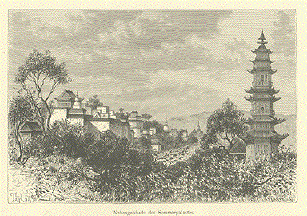
The Summer Palace in Pekin (now Beijing)
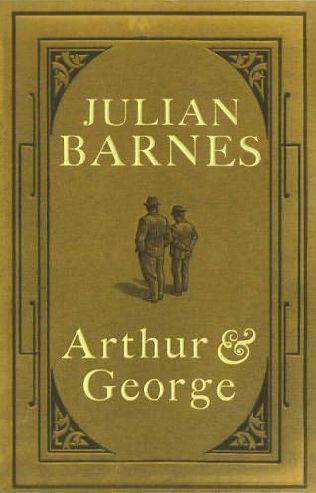
 The husband of one of my fellow book readers and discussers suggested some science fiction books when I admitted to him I used to be an avid reader of such. I haven’t yet read the three now in my possession:


