
In recent years I have come across many references to the book Answer to Job, by C.G. Jung. Job is a gentile man in the Book of Job of the Hebrew Bible.
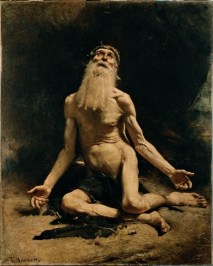
Painting of Job, by Léon Bonnat
I sometimes hear the phrase “the patience of Job” but, until reading this book, I was unaware of the story that gives rise to this phrase. But what could be so important about the story that C.G. Jung would write a book about it—published when he was age 77—calling it the only book of his he would not change? Further, a learned Jungian Scholar, Edward F. Edinger, wrote a companion book explaining the implications of Jung’s assertions in Answer to Job about Yahweh, God, Jesus, Mary, Sophia, Satan, the female and the male principles, the conscious and unconscious in man, St. John and other Biblical persons, and other items of historical, religious, mythical, philosophical, and psychological interest. His book is Transformation of the God Image: An Elucidation of Jung’s “Answer to Job.”
As Alan Watts points out in his lecture “Who is it Who Knows There is no Ego,” all the words and concepts used in this essay are created and used by Man to distinguish among imagined parts of the undifferentiated Whole so he (Man) can do things with them and to be less frightened of the unknown. With this in mind, I will boldly summarize Jung’s book:
- Job’s job was to “humanize” Yahweh/God who was formerly amoral and unselfconscious.
- A further implication is that the story appeared in the Old Testament to show Man he could hope to emulate God (in fact, contained God within him), but Man must restrain himself in the use of the powers revealed to him—those that formerly were attributable only to an external and amoral Yahweh/God.
I place these quite imperfectly formed words and thoughts in front of you in the hope of stimulating you to read at least the Jung book; but the Edinger book will clarify and modernize some important portions of Jung’s language and its translation from the German. Also, you will get insights into the precepts and work of Jungian psychologists.
Last, as I read through both books I was reminded of soulfully poetic passages along similar lines (as distinct from Jung’s academic approach) in Nikos Kazantzakis’s autobiography, Report to Greco:
Now for the first time since the world was made, man has been enabled to enter God’s workshop and labor with him. The more flesh (man) transubstantiates into love, valor and freedom, the more truly he becomes Son of God….
What a fearful ascent from monkey to man, from man to God!
 So what do these lymph nodes do? They protect and defend your body by sensing, attacking, immobilizing, killing, and flushing the remains of the bad critters that have invaded your otherwise pristine flesh. When thus engaged in dealing with the alien invaders, the lymph nodes ramp up their activities and become swollen with lymphatic fluid which contains the disease-eating organisms of your body—the
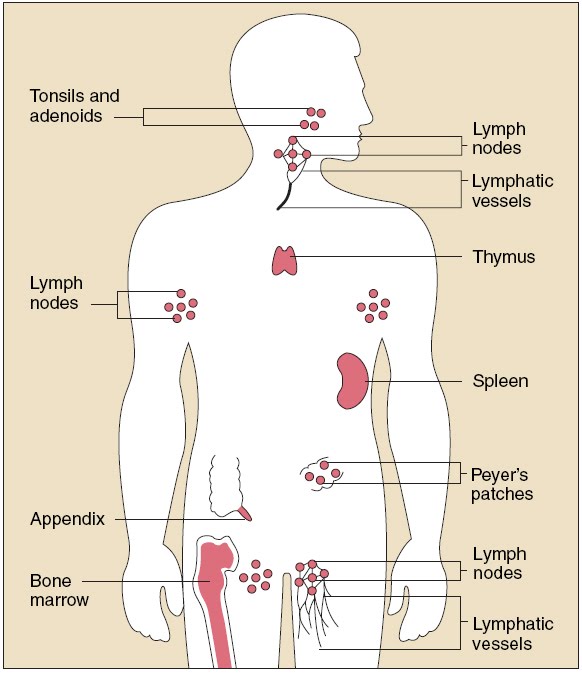 I attended an open house for the clinic which will open for business in early 2010, and received a guided tour and lecture on the subject of Helena’s expertise. She likes to use the metaphor of a sewer system to describe the lymphatics system. This analogy appeals to me, my having been trained in public health and perceiving the hidden
  Another question you might ask is: how can the lymph fluids circulate if there is no “heart” attached to the system? There is
  The Pavellas Perspective