
This excursion into that which is asserted to be inescapably human began with the reading of The Songlines by Bruce Chatwin, an assignment from the monthly book discussion group I attend in Stockholm. I quote here from the text in the link, above, under the book’s title:
The basic idea that Chatwin posits is that language started as song, and the (Australian) aboriginal dreamtime sings the land into existence. A key concept of aboriginal culture is that the aboriginals and the land are one. By singing the land, the land itself exists; you see the tree, the rock, the path, the land. What are we if not defined by our environment? And in one of the harshest environments on Earth one of our oldest civilizations became literally as one with the country. This central concept then branches out from Aboriginal culture … (to) the African Savannah (when) we were a migratory species, moving solely on foot, hunted by a dominant brute predator in the form of a big cat: hence the spreading of ‘songlines’ across the globe, eventually reaching Australia … where they are now preserved in the world’s oldest living culture.
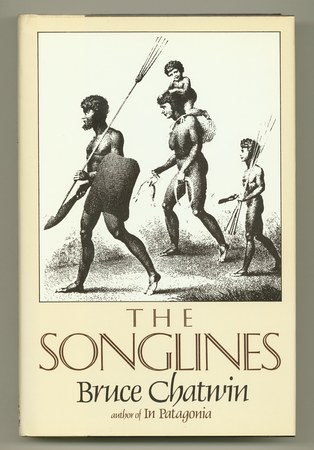
[The book can be called ‘fiction’, according to a review in Spike Magazine: One of the most amazing qualities that sets Chatwin apart was his ability to mix fact and fiction in his ‘stories’. As he said himself, “The word story is intended to alert the reader to the fact that, however closely the narrative may fit the facts, the fictional process has been at work.” This is idea is best held in mind when considering his best-selling book, The Songlines (1987). (Source)]
Somewhat over half-way through the book, Chatwin digresses from present day Australia (ca. 1980s) into a presentation and discussion of notes he has written during his many years of travel in the least urbanized parts of our world. Many of these notes are from his readings:
- Thus if one just keeps on walking, everything will be all right -Søren Kierkegaard, letter to Jette (1847)
- Solvitur Ambulando–It is solved by walking -St. Augustine
- Perhaps our need for distraction, our mania for the new (is) an instinctive migratory urge akin to that of birds in autumn -Chatwin
- Our nature lies in movement; complete calm is death -Blaise Pascal
- I was forced to travel, to ward off the apparitions assembled in my brain -Arthur Rimbaud
- Natural selection has designed us for a career of seasonal journeys on foot through a blistering land of thorn-scrub or desert–Chatwin
 I was delighted that Chatwin had recorded in his notebook conversations with Konrad Lorenz, one of the founders of modern ethology, and author of the best-selling On Aggression (1966). According to Lorenz, animals, particularly males, are biologically programmed to fight over resources. Also the book addresses behavior in humans, including discussion of a model of emotional or instinctive pressures and their release, shared by Freud, and the abnormality of intraspecies violence and killing (emphasis added).
I read a lot of popular scientific writing during the 1960s in this new examination of animal behavior as it may apply also to man as animal (ethology). Two other authors in this realm are Robert Ardrey and Desmond Morris.
African Genesis and The Territorial Imperative, two of Robert Ardrey’s most widely read works, as well as Desmond Morris’s The Naked Ape (1967), were key elements in the public discourse of the 1960s which challenged earlier anthropological assumptions. Ardrey’s ideas notably influenced Arthur C. Clarke and Stanley Kubrick in the development of 2001: A Space Odyssey.
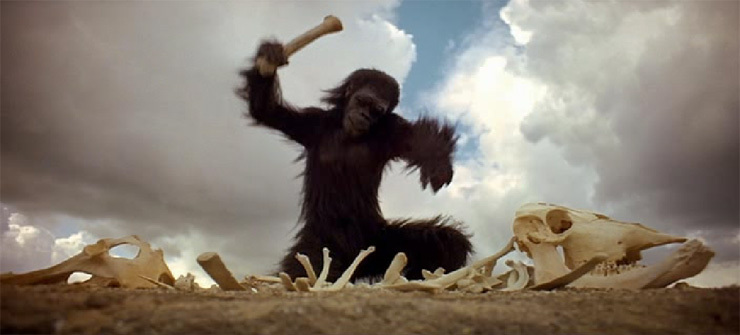
From opening scene 2001: A Space Odyssey
- To live in one land is captivity; to (run in) all countries, a wild roguery–John Donne
- It is good to collect things, but it is better to go on walks–Anatole France
- We Lapps (Sámi) have the same nature as the reindeer: in the springtime we long for the mountains; in the winter we are drawn to the woods–Turi’s Book of Lappland
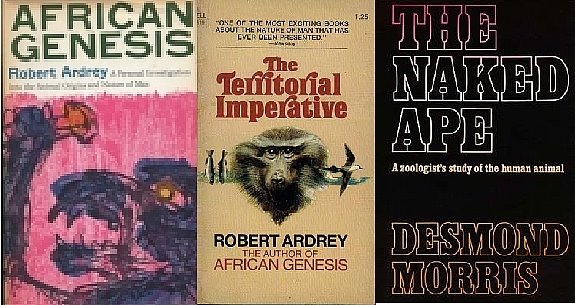
Not all the theories propounded by these and other authors in this realm and during this time (1960s and 1970s) hold up today, especially that we humans are inherently killers or descended form “killer apes,” as Ardrey suggests. But, back to the book that started this conversation: The Songlines, by Bruce Chatwin–I recommend it to you, if for no other reason (and there are many), to live, as much as is possible through reading of it, in the Australian Outback.
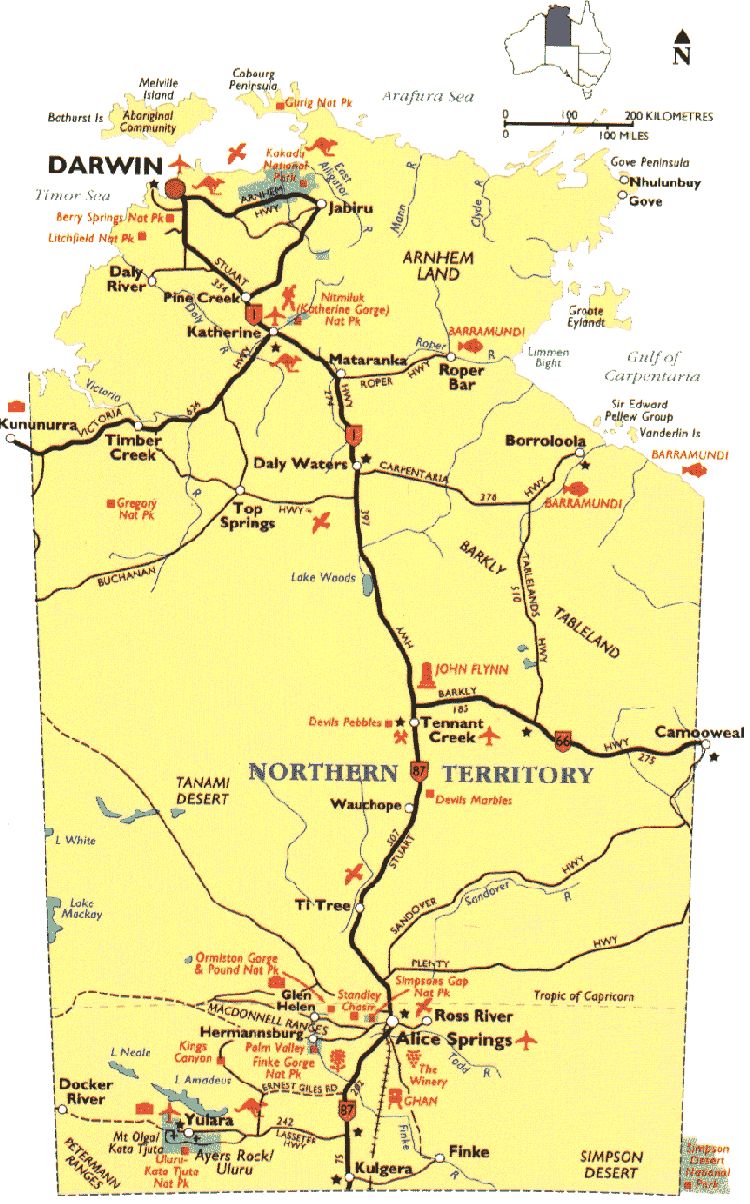
The Northern Territory of Australia, including Alice Springs, a major reference point for the travels in this book




 The Pavellas Perspective