
How can a story about the purposeful murder of 650,000 people be wonderful? When the story of a few survivors is so poetically and lovingly told, as in The Siege by Helen Dunmore.
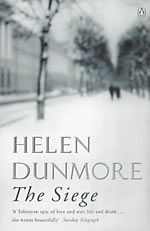 The siege of Leningrad lasted from September, 1941 to January, 1944. By the end of the siege, 632,000 people are thought to have died with nearly 4,000 people from Leningrad starving to death on Christmas Day, 1941. The first German artillery shell fell on Leningrad on September 1st, 1941. The city, one of the primary targets of ‘Operation Barbarossa‘, was expected “to fall like a leaf” (Adolf Hitler). [Source]
Total duration of the siege was about 900 days. Economic destruction and human losses in Leningrad on both sides exceeded those of the Battle of Stalingrad, or the Battle of Moscow, or the nuclear bombing of Hiroshima and Nagasaki. Of 1.5 million total Soviet casualties, one cemetery in Leningrad has interred 600 thousand civilian victims of the siege. [Source]
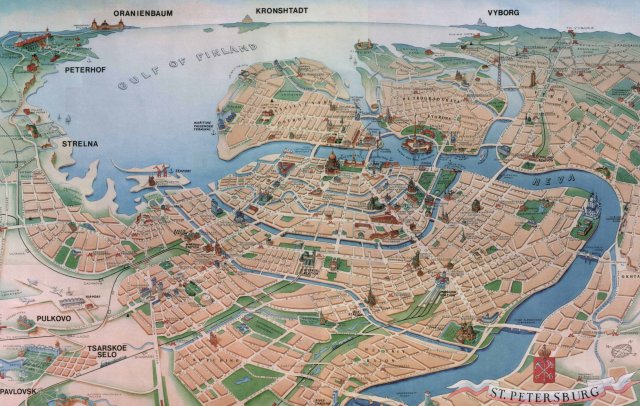
Leningrad has reverted to its original name, St. Petersburg. This former capital of imperial Russia is on the Baltic Sea and is, therefore, neighbor and accessible by sea to many capital cities: Helsinki, Tallinn, Riga, Copenhagen, Stockholm.
Because it is mostly a city of islands, as is Stockholm, Leningrad was isolated from the rest of the Soviet Union by the Nazis’ control or destruction of its bridges.
But, back to the book. Not only are we given a prose poem, in my opinion, but also a close look at the institutional paranoia of the Soviet era. The main character of the story is in constant fear of not pleasing her bureaucratic superior and in seeming not with the current politically correct thinking and behaving, as all Soviet citizens were subject to.
A small but important picture is given of the government official in charge of the food supply for the starving residents of Leningrad. One of his ukases was to inform the people of the nutritional value of wallpaper paste.
The will to survive, the willing sacrifice for those who should survive, the terrible ambitions of leaders feeling God-like powers, all are explored here.
Don’t miss it.


 The Pavellas Perspective