—
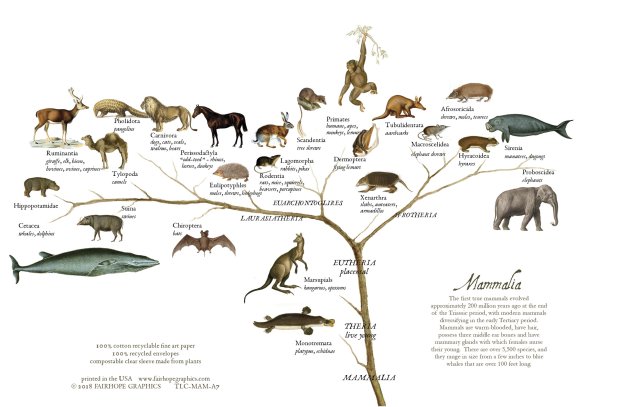
What, in the species homo sapiens sapiens, is unique among all other species in the animal kingdom?
ChatGPT said:
1. Complex Language and Communication
- Uniqueness:
- Humans have the ability to use complex, symbolic language that involves syntax, grammar, and abstract concepts.
- Language enables storytelling, planning for the future, sharing knowledge across generations, and forming shared cultural identities.
- Impact:
- Written and spoken language underpins science, art, and global communication networks.
2. Advanced Tool Use and Technology
- Uniqueness:
- While many species use tools, humans design and improve tools to a level of complexity unmatched in the animal kingdom.
- Humans also develop technologies that transform environments on massive scales (e.g., agriculture, medicine, industry, and computing).
- Impact:
- Technological advancements enable humans to dominate ecosystems, explore outer space, and manipulate matter at atomic levels.
3. Abstract Thinking and Creativity
- Uniqueness:
- Humans can think abstractly about concepts like mathematics, philosophy, morality, and metaphysics.
- Creative endeavors like art, music, and literature have no parallel in other species.
- Impact:
- Abstract thinking leads to innovations, cultural heritage, and a quest for understanding the universe and our place in it.
4. Self-Awareness and Metacognition
- Uniqueness:
- Humans are capable of reflecting on their own thoughts, emotions, and existence.
- The concept of “self” is deeply ingrained in human culture and psychology.
- Impact:
- This self-awareness drives existential questions, religious beliefs, and philosophies of life.
5. Cumulative Culture
- Uniqueness:
- Humans accumulate, refine, and transmit cultural knowledge over generations.
- This cumulative culture includes not just survival skills but also abstract ideas, traditions, and scientific knowledge.
- Impact:
- It allows exponential growth in knowledge and capabilities, leading to rapid societal evolution compared to biological evolution.
6. Large-Scale Cooperation
- Uniqueness:
- Humans cooperate in large groups of unrelated individuals, often through shared belief systems (e.g., religions, ideologies, and laws).
- This cooperation is based on abstract principles, social contracts, and institutional structures.
- Impact:
- Enables the creation of complex societies, economies, and governance systems.
7. Extended Childhood and Social Learning
- Uniqueness:
- Humans have an unusually long period of childhood and adolescence compared to other species.
- This extended development allows for intensive learning and socialization.
- Impact:
- Provides time for acquiring cultural, technical, and interpersonal skills essential for functioning in human societies.
8. Use of Fire
- Uniqueness:
- Humans are the only species that have harnessed fire for cooking, warmth, and toolmaking.
- Impact:
- Cooking improves nutrient absorption and food safety, while fire enables advanced metallurgy and technological development.
9. Art and Symbolism
- Uniqueness:
- Humans create art and symbols that serve no immediate survival purpose, such as cave paintings, sculptures, and jewelry.
- These express identity, beliefs, and emotions.
- Impact:
- Artistic expression fosters cultural bonds and communicates ideas across time and space.
10. Ethical and Moral Frameworks
- Uniqueness:
- Humans develop ethical systems, legal codes, and philosophies that govern behavior beyond instinctual drives.
- Impact:
- Morality underpins the functioning of societies and enables humans to live cooperatively in complex groups.
11. Adaptability to Diverse Environments
- Uniqueness:
- Humans can adapt to nearly every environment on Earth, from arctic tundras to deserts, using technology, clothing, and shelter.
- Impact:
- This adaptability has enabled humans to become a global species and colonize nearly all terrestrial ecosystems.
Conclusion
While other species share some traits with humans (e.g., tool use, communication, or social structures), no other species combines these abilities with the depth, complexity, and global impact that define Homo sapiens sapiens. This uniqueness has allowed humans to transcend biological limitations and fundamentally reshape the planet.
—
ChatGPT said:
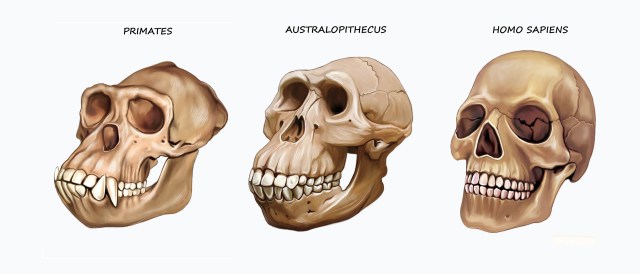
The unique cognitive, social, and cultural abilities of Homo sapiens sapiens are closely tied to distinctive physiological and anatomical features that differentiate humans from other species in the animal kingdom. Below is a detailed breakdown of the most significant features:
1. Highly Developed Brain
- Size and Structure:
- Humans have disproportionately large brains relative to body size, with an average volume of about 1,300-1,500 cm³.
- The cerebral cortex, especially the prefrontal cortex, is highly developed, facilitating advanced reasoning, decision-making, and planning.
- Impact:
- Supports abstract thinking, language, self-awareness, and creativity.
- Enables the formation of complex social structures and cumulative cultural knowledge.
2. Vocal Apparatus for Complex Speech
- Anatomical Features:
- The larynx (voice box) is positioned lower in the throat compared to other primates, expanding the range of vocal sounds humans can produce.
- The tongue is highly mobile and works with the lips and palate to articulate speech.
- The hyoid bone, a unique structure, supports the muscles involved in speech.
- Impact:
- Enables humans to produce complex spoken languages with intricate grammar and syntax.
3. Hands with Precision Grip
- Anatomical Features:
- Opposable thumbs allow humans to grasp and manipulate objects with precision.
- Fine motor control in the fingers is unmatched in other species.
- Impact:
- Facilitates tool-making, writing, and artistic expression.
- Supports activities like sewing, typing, and operating machinery.
4. Upright Posture and Bipedalism
- Anatomical Features:
- The spine has a unique S-shaped curve for balance and shock absorption during upright walking.
- The pelvis is shorter and broader, supporting the trunk during bipedal movement.
- Long legs and arched feet with strong tendons optimize energy efficiency while walking or running.
- Impact:
- Frees the hands for tool use and carrying objects.
- Increases the field of vision and supports long-distance endurance.
5. Advanced Vision
- Anatomical Features:
- Forward-facing eyes provide stereoscopic (3D) vision, crucial for depth perception.
- High visual acuity, due to a dense concentration of cone cells in the fovea of the retina.
- Impact:
- Enhances tool use, hunting accuracy, and the ability to interpret facial expressions and social cues.
6. Extended Childhood Development
- Physiological Features:
- Humans have an unusually long period of dependency and brain development compared to other species.
- Neural plasticity during childhood allows for the acquisition of language, culture, and complex skills.
- Impact:
- Provides the time needed for learning and socialization within human communities.
7. Reduced Sexual Dimorphism
- Anatomical Features:
- Compared to many primates, humans exhibit less pronounced physical differences between males and females.
- Shared parenting and cooperative child-rearing are supported by this reduced dimorphism.
- Impact:
- Promotes social bonding and cooperation between genders.
8. Facial Musculature for Expression
- Anatomical Features:
- Humans have more facial muscles than other primates, allowing for a wide range of expressions.
- Impact:
- Facilitates nuanced non-verbal communication, enhancing social interactions and emotional bonding.
9. Unique Sweat Glands and Thermoregulation
- Physiological Features:
- Humans have an abundance of eccrine sweat glands, enabling efficient cooling through perspiration.
- Relative hairlessness aids in heat dissipation during physical exertion.
- Impact:
- Supports long-distance running and hunting in hot climates, contributing to endurance-based survival strategies.
10. Dentition and Jaw Structure
- Anatomical Features:
- Smaller teeth and jaws compared to other primates reflect a diet that includes cooked food.
- The chin (a uniquely human feature) may be linked to speech or other evolutionary adaptations.
- Impact:
- Adaptations to food preparation and processing reduce the energy required for digestion, allowing more energy for brain development.
11. Neural and Hormonal Adaptations for Sociality
- Physiological Features:
- High levels of oxytocin, a hormone that promotes social bonding and trust.
- Mirror neurons in the brain enable empathy and the understanding of others’ intentions.
- Impact:
- Supports cooperation, complex social structures, and the development of moral systems.
12. Larger Energy Demands and Metabolic Adaptations
- Physiological Features:
- The human brain consumes about 20% of the body’s energy, a higher proportion than in any other species.
- Adaptations for a diet rich in proteins and fats (e.g., hunting and cooking) support these energy demands.
- Impact:
- Allows for sustained cognitive and physical activity.
Conclusion
The unique abilities of Homo sapiens sapiens arise from an intricate interplay of physiological and anatomical features. These traits have not only enabled humans to survive and adapt but also to dominate and transform the planet in unprecedented ways. The combination of advanced cognition, communication, tool use, and social cooperation makes humans uniquely capable among all species.
—
You said:
ChatGPT said:
Humans host a wide range of organisms that are essential to their health and survival. These organisms, collectively known as the human microbiota, live on and within the human body. The term microbiome refers to the genetic material of these microorganisms. These organisms perform critical roles in digestion, immunity, and other physiological functions.
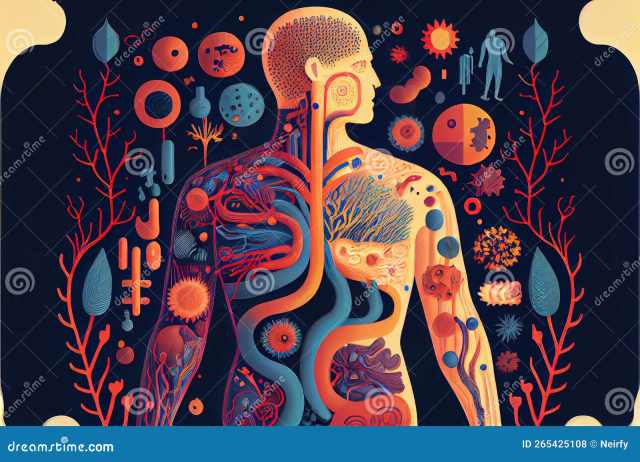
Here are the main types of organisms and their roles:
1. Bacteria
Bacteria make up the majority of the human microbiota and are found in various parts of the body.
Key Locations and Functions:
- Gut Microbiota:
- Most abundant in the colon.
- Help digest complex carbohydrates, synthesize vitamins (e.g., B vitamins and vitamin K), and produce short-chain fatty acids.
- Regulate immune responses and prevent colonization by harmful pathogens.
- Examples: Bacteroides, Lactobacillus, Bifidobacterium.
- Skin Microbiota:
- Provide a protective barrier against harmful microorganisms by competing for resources.
- Produce antimicrobial substances to protect the skin.
- Examples: Staphylococcus epidermidis, Propionibacterium acnes.
- Oral Microbiota:
- Maintain oral health and prevent harmful bacteria from causing infections.
- Assist in the initial stages of digestion by breaking down food particles.
- Examples: Streptococcus mutans, Porphyromonas gingivalis.
- Vaginal Microbiota:
- Maintain an acidic environment (via lactic acid production) to prevent infections.
- Example: Lactobacillus species.
2. Viruses
Viruses are also part of the human microbiota, referred to as the virome.
- Some viruses infect bacteria in the gut (bacteriophages) and may help regulate bacterial populations.
- Others exist harmlessly in the human body, possibly influencing immune system development.
- Examples: Bacteriophages, latent herpesviruses.
3. Fungi
Fungi are a smaller but significant part of the microbiota.
- Locations:
- Found on the skin, in the mouth, and in the gastrointestinal and urogenital tracts.
- Role:
- Help maintain microbial balance but can cause infections if overgrown (e.g., in immunocompromised individuals).
- Examples:
- Candida albicans (usually benign but can cause infections in certain conditions).
4. Archaea
Archaea are a group of microorganisms distinct from bacteria, found in the gut.
- Role:
- Participate in methane production during digestion.
- Example: Methanobrevibacter smithii.
5. Protists
Protists are single-celled eukaryotic organisms.
- Role:
- Some are harmless commensals that coexist with other microbes.
- Their precise roles in health and disease are less understood compared to bacteria.
- Examples:
- Blastocystis species (some strains may contribute to gut health, while others may be associated with disease).
6. Helminths (Parasitic Worms)
In some populations, helminths are common and can have a symbiotic relationship with their host.
- Role:
- Modulate the immune system, potentially reducing the risk of autoimmune diseases and allergies.
- Example: Trichuris trichiura, Ascaris lumbricoides (though their presence may also cause harm in some cases).
7. Mitochondria
While not separate organisms, mitochondria are organelles within human cells that originated from ancient symbiotic bacteria.
- Role:
- Produce energy (ATP) for cellular processes via oxidative phosphorylation.
- Critical for metabolism and cell survival.
8. Transient Microorganisms
Humans also host transient microorganisms that temporarily inhabit the body through contact with the environment, food, or other people.
- Role:
- Some provide temporary benefits, while others may pose risks if they disrupt the normal microbiota balance.
Interactions Between Humans and Microbiota
- Symbiosis: The human microbiota primarily has a mutualistic relationship with its host, where both benefit.
- Dysbiosis: Disruptions in the microbiota balance (due to antibiotics, diet changes, or disease) can lead to issues such as infections, inflammation, or chronic conditions like obesity and diabetes.
Conclusion
Humans are intricately dependent on a vast array of microorganisms, including bacteria, viruses, fungi, archaea, protists, and even helminths. These organisms contribute to digestion, immunity, skin health, and overall well-being. Maintaining a balanced microbiota is crucial for human health, and disruptions to this balance can have significant consequences.
Share this:
- Share on Pinterest (Opens in new window) Pinterest
- Share on Telegram (Opens in new window) Telegram
- More
- Print (Opens in new window) Print
- Email a link to a friend (Opens in new window) Email
- Share on LinkedIn (Opens in new window) LinkedIn
- Share on Facebook (Opens in new window) Facebook
- Share on Reddit (Opens in new window) Reddit
- Share on Tumblr (Opens in new window) Tumblr
- Share on X (Opens in new window) X
- Share on WhatsApp (Opens in new window) WhatsApp

 The Pavellas Perspective
Are homosapiens unique? Research into the lives and behaviour of plants show that in many ways plants have very sophisticated behaviour patterns, approaching and even greater than those of homo sapiens. So what is unique? And homosapiens are in some cases dependent on the behaviour of plants. example: seeds which demand fire and heat to germinate. In Australia the aborigines have learnt from the seeds that they have to start bush fires or there will be no harvest.
LikeLike
As I understand it, certain characteristics and abilities may be unique to any given species, but as you point out, all are interdependent for survival. Thanks for the comment.
LikeLike