
Leaving the spacious entry and lobby of Artipelag to enter its familiar gallery, I turned 180 degrees immediately to the right and was literally jolted upon seeing this painting:
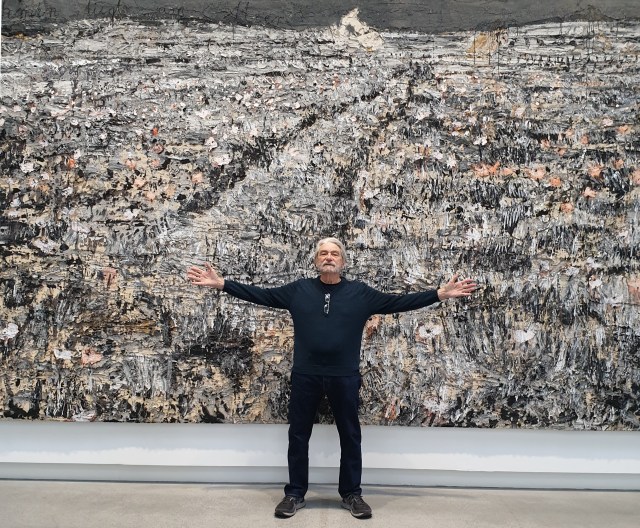
Here it is, in full:
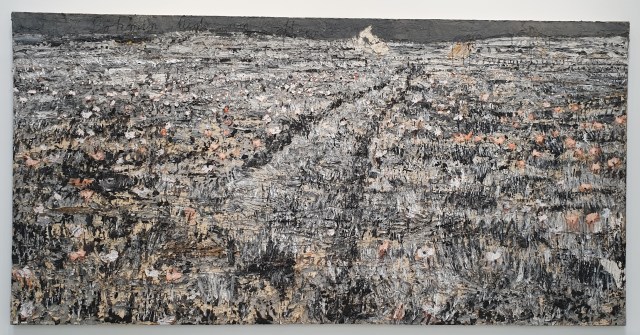
This painting by Anselm Kiefer is named Böhmen liegt am Meer after the poem by Ingeborg Bachmann. The translation of the poem to English, via Google, can be seen/downloaded here: If houses are green. It appears to be a lament regarding the land of Bohemia.
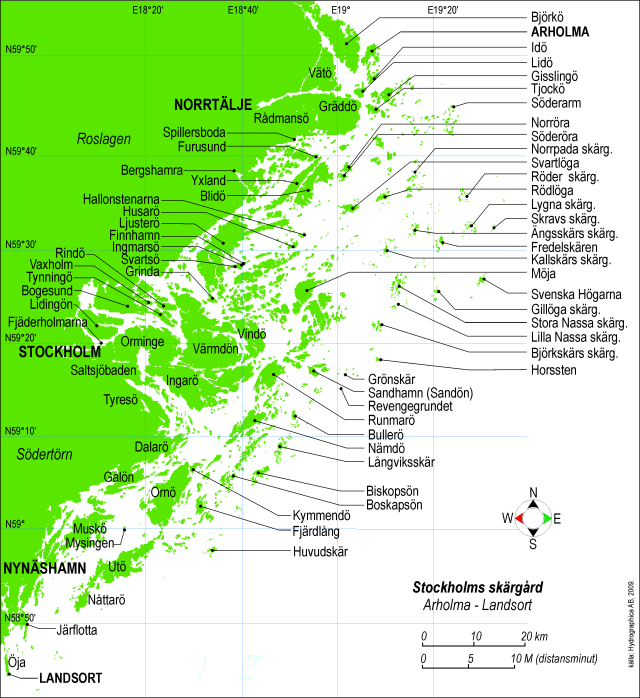
The gallery and restaurant Artipelag is set in the woods of Värmdö, the third largest island on the eastern Swedish coast, after Gotland and Öland, Occupying an area of approximately 181 square km, Varmdö (spelled Värmdön, below) lies in the innermost area of the Stockholm archipelago, which has approximately 24,000 islands and islets.
Turning 90 degrees to the left I saw this on the gallery wall:
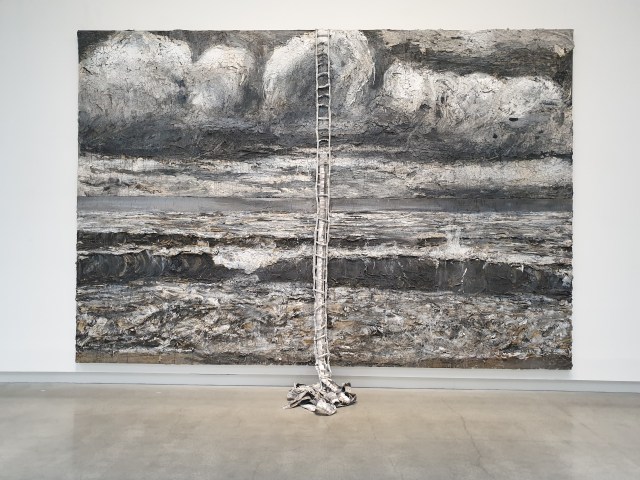
The above is entitled AM ANFANG (IN THE BEGINNING)
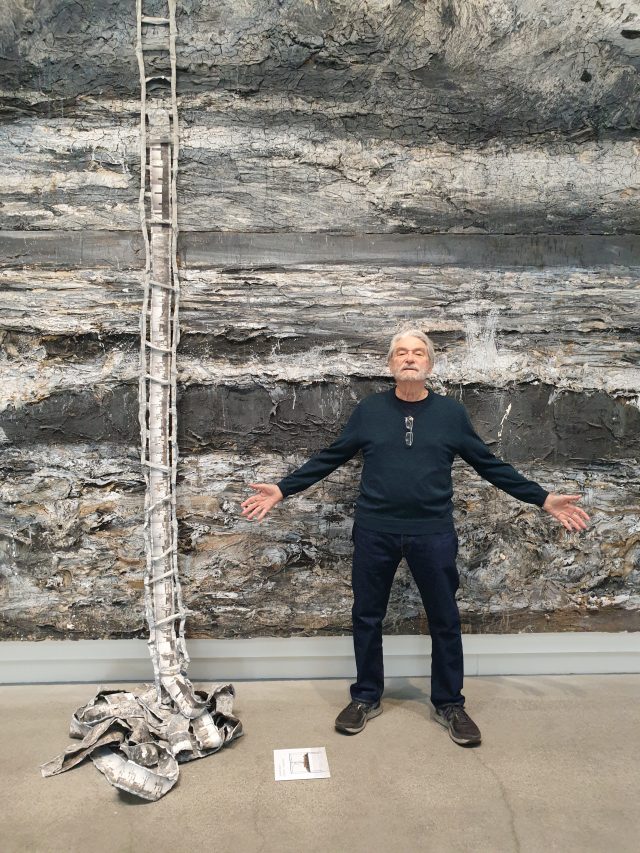
For perspective as to the size of the painting.
Here is part of a biography of the artist:
Childhood and Early Life
Kiefer was born on March 8, 1945 during the final months of World War II. The son of an art teacher, Kiefer was drawn to art and saw himself as an artist. He was raised in a Catholic home in the Black Forest near the eastern bank of the Rhine, an environment that would play a formative role in his development as an artist and would provide imagery and symbolism for his work. His family moved to Ottersdorf in 1951 and Kiefer attended grammar school in Rastatt.
Although he had artistic ambitions from an early age, Kiefer studied law and Romance languages between 1965 and 1966 at the Albert-Universitat, Freiberg. Soon thereafter he abandoned his aspiration to become a lawyer to focus solely on visual art, taking classes with the influential painter Peter Dreher at the Staatliche Akademie der Bildende Kunste in Karlsruhe. During this period, at the age of 24, he also traveled extensively throughout Europe.
Kiefer was part of a generation of Germans who felt the shame and guilt of the Holocaust, but had no personal experience of it. The artist has stated that the lack of discussion of WWII in school became a creative wellspring for him. He began his artistic career with a provocative photographic series titled Occupations (1969), which caused controversy because of its overt dealing with the Nazi past.
…
The Legacy of Anselm Kiefer
While Kiefer rose to prominence in the 1970s and 1980s in the midst of the Neo-Expressionist movement, his work continues to resonate with artists and audiences alike. His use of materials, influenced in part by Robert Rauschenberg‘s combines and the unconventionality of Art Brut and Arte Povera, brought a revitalized awareness of the symbolic use of everyday non-art resources in painting. This aspect of his practice rekindled interest in three-dimensional, many-layered canvases and encouraged later artists, such as Zhang Huan and Dan Colen, to experiment with materials to a greater extent.
Kiefer’s dense compositions and austere subjects have had an enduring impact on artists who explore themes of war, memory, and loss in a range of media, from painters William Kentridge, Stephen Barclay, and Christopher Bramham to photographers Zoe Strauss and Jyrki Parantainen and installation artist Christian Boltanski. Ever teetering on the edge between abstraction and figuration, Kiefer uses a distinctly poetic, psychological style to convey heady social and political issues, abandoning the cold aesthetics of Minimalism and Conceptual art in favor of a more redolent, painterly, and moralistic visual language. Along with his contemporaries Georg Baselitz, Sigmar Polke, and Gerhard Richter, he has succeeded in bringing social issues to the forefront of contemporary discussions, forcing Germany to reckon with its horrific past.
(End of biography excerpt)
More images:
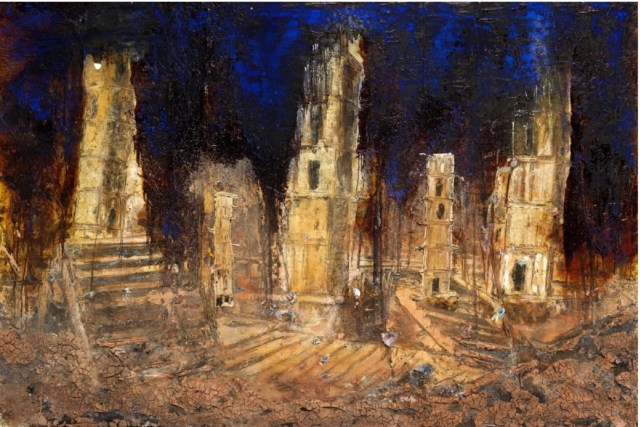 Walhalla
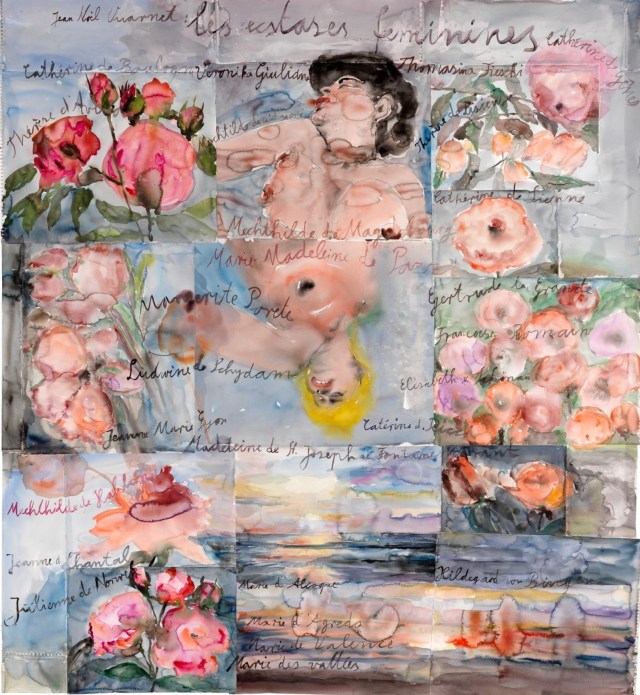 The Feminine Ecstasies
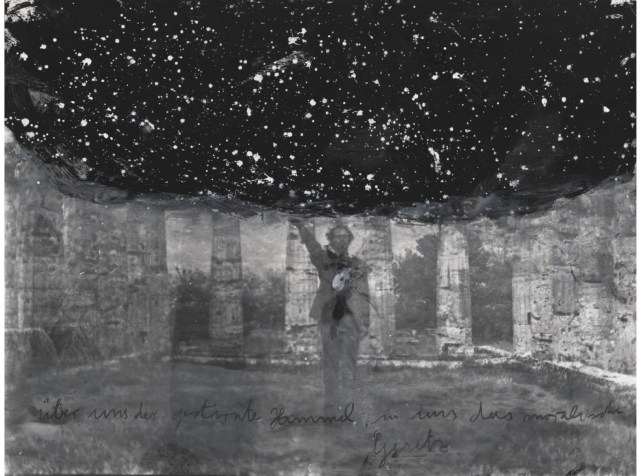 The Starry Heavens Above Us, and the Moral Law Within
In 1992, having left Germany, Kiefer acquired La Ribaute, an old silk factory in Barjac. The site developed organically, comprising buildings, outdoor art installations, subterranean chambers and a five-level concrete amphitheatre. The artist lived at the 40-hectare site, 70km north-west of Avignon, until 2007, after which he relocated to a new studio space at Croissy on the outskirts of Paris. (Source)
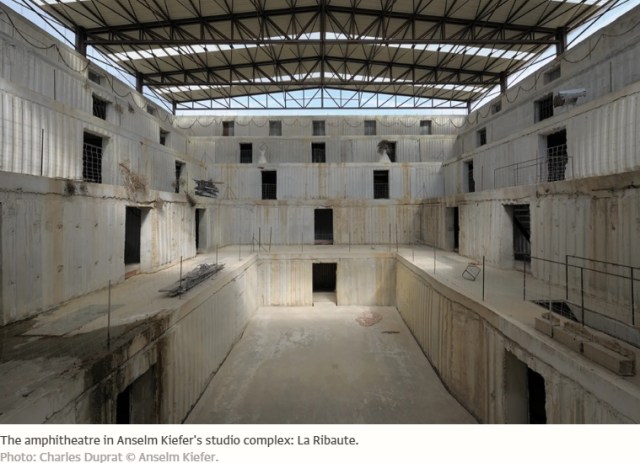
“There are several art installations in the landscape interconnected by paths as well as underground tunnels that the artist has designed,” says Sirén. “Barjac has continued to be a secondary studio, especially in the summer season. You might compare the foundation in concept to Marfa [the small city in Texas that has become an arts hub]; it’s an artist space now owned by a foundation, the purpose of which is to preserve it for posterity.”
La Ribaute has grown, with more than 60 buildings and art areas, known as pavilions. “Mr Kiefer added his own touch with these art spaces; some of them have sculptures, some have paintings,” Sirén says. “In recent years, he has welcomed artists he feels kinship with to contribute permanent installations to the ecosystem of La Ribaute, starting with Wolfgang Laib in 2014. Monica Bonvicini, the latest contributor, will unveil her work in July.” Laurie Anderson and Valie Export have also provided works.
The project reflects Kiefer’s “trans-national” approach, says Sirén. A project statement outlines how the Eschaton-Anselm Kiefer Foundation symbolises “Kiefer’s interest in the unity of Europe and the constant exchange between cultures”, encompassing three countries: Austria (the foundation headquarters), Germany (the artist’s birthplace) and France. (Source)
Here are two videos which expand upon the work of this great contemporary artist:
Beyond White Cube: Anselm Kiefer in Barjac
For readers living in Sweden, I recommend you visit the current exhibition at Artipelag.
 From the Louvre: portrait de momie ; L’Européenne, 100 / 150 (époque romaine), Lieu de provenance : Antinoé (rive est Moyenne Égypte->Moyenne Égypte->Égypte)

