Starting one’s journey toward self-realization
 This is one of those rare books by a contemporary author, or author of any era, which helps one understand the works of celebrated writers, philosophers, and a few artists, in this case, by putting them into perspective with each other and within a conceptual framework that gives the reader an overall comprehension of their respective contributions to man’s understanding of himself.
Another book which I found to be similarly helpful, although different in tone and approach, is one by philosopher and academic Philip H. Rhinelander.
I have long admired the written work of Colin Wilson and have also listened to him on taped radio interviews which, unfortunately, I have lost through being so peripatetic.
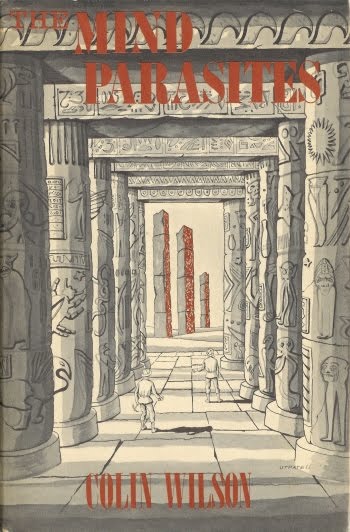
I believe the first book of Wilson’s I read is The Mind Parasites, around thirty-five years ago. Since then I have read many more of his books, having lent some out indefinitely, it seems. The ones I have managed to retain, in addition to The Mind Parasites, are:
- Aleister Crowley: The Nature of the Beast
- G.I. Gurdjieff: The War Against Sleep
- Nikos Kazantzakis
- Lord of the Underworld: Jung and the Twentieth Century
- The Philosopher’s Stone
- The Strange Life of P.D. Ouspensky
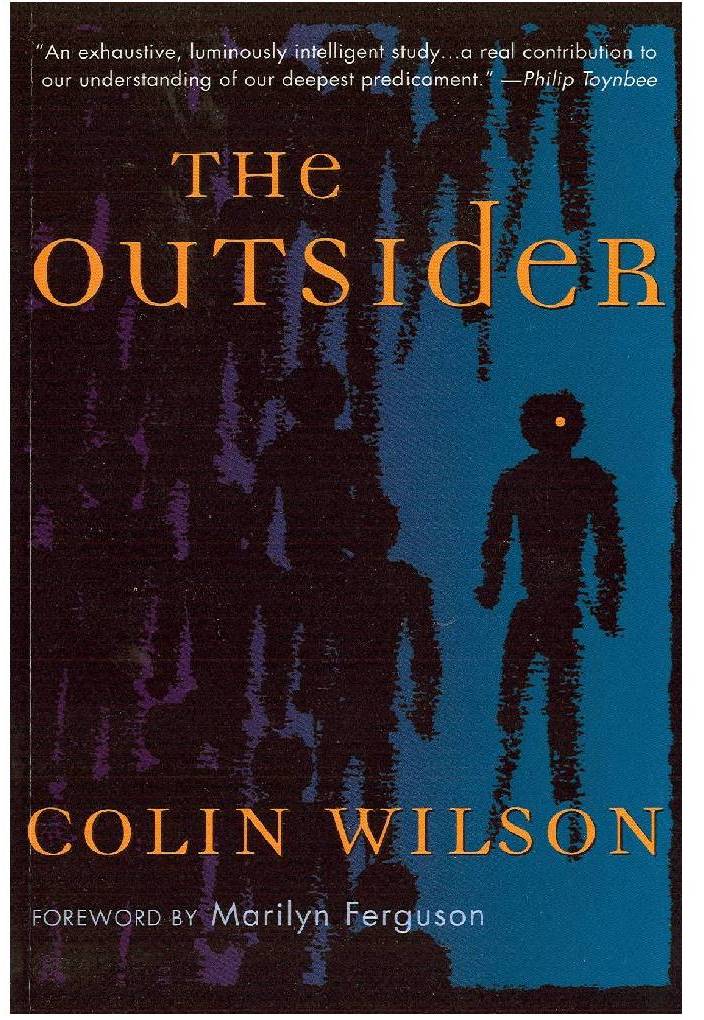
The Outsider, first published in 1956 when Wilson was 24, rocketed him to fame, yet I hadn’t read his most widely known book until recently. Here is a synopsis:
…an insightful work of literary and philosophical criticism—a timeless preoccupation which perhaps garners more mainstream attention than his subsequent writings on the occult and crime. The book is structured in such a way as to mirror the outsider’s experience: a sense of dislocation, or of being at odds with society. These are figures like Dostoevsky’s “Insect-Man” who seem to be lost to despair and non-transcendence with no way out.
More successful—or at least hopeful—characters are then brought to the fore. These include Steppenwolf and even the hero of Hesse’s book of the same name—and these are presented as examples of those who have insightful moments of lucidity in which they feel as though things are worthwhile/meaningful amidst their shared, usual, experience of nihilism and gloom. Sartre’s Nausea is herein the key text—and the moment when the hero listens to a song in a cafe which momentarily lifts his spirits is the outlook on life to be normalized. Wilson then engages in some detailed case studies of artists who failed in this task and tries to understand their weakness—which is either intellectual, of the body or of the emotions. The final chapter is Wilson’s attempt at a “great synthesis” in which he justifies his belief that western philosophy is afflicted with a needless “pessimistic fallacy”—a narrative he continues throughout his oeuvre under various names… [Source].

Colin Wilson (1931 – 2013)
The Outsider has been and will continue to be, especially valuable to me because in it Wilson discusses many of the authors and their works I have read, some mentioned in the pages of this journal, including:
In no way have I given you the essence of The Outsider in this brief discussion. It is a very important book to start one on one’s journey to self-realization or to help the older of us to make course corrections toward realizing our fullest possible potential.
I can say that engaging in armchair philosophy might be helpful, but insufficient. One must act.