Putin’s return “a national catastrophe for Russia”

Those are the words Yevgeniya Albats wrote in her political journal, the Russian New Times Magazine, of which she is chief editor.

Yevgeniya Albats

My article today will recount the facts, opinions and assertions that Albats offered during a seminar at the Swedish Institute of International Affairs on 15 November 2011. After her presentation a three-person panel, described below, responded to her talk and to questions from the audience.

Vladimir Putin was in office as president of the Russian Federation 7 May 2000 – 7 May 2008. On 8 May 2000, the second day of his first four-year term, he issued a secret decree (ukase) which gave him control over the nation’s alcohol production, then the second largest industry in Russia. Thus began a series of moves which ultimately put into the hands of the president, the governmental apparatus reporting to him, and indirectly and privately through close associates and family, around 15% of the current gross domestic product (GDP) of the nation. The CIA’s 2010 estimate of Russia’s GDP is US$1.465 trillion, so if Albats’s assertion is close to correct, the annual revenues controlled, directly and indirectly, by Putin are around US$220 billion.

Albats presented a chart showing, among others, these additional industries under direct or indirect control: financial services, oil/petroleum, railroads and other transport, construction, metal production, energy, chemicals, media, telecoms, and sport. Most important is that all the industries serving the military are under state control. These are not all owned by the state. Others are  controlled through the state regulatory agencies and through ownership by Putin’s circle of associates, including family. (The three groups through which Putin exercises influence and control are discussed further below)

Vladimir Putin, Past president of Russia, Current Prime Minister, and… future President?

The Russian Duma, equivalent to the lower house in a bicameral legislature, has been made powerless to control the cash flow of state run enterprises. One result of this concentration of control and resultant power is that Putin and his inner circle have become extremely wealthy.

Putin’s presidency ended, per the Russian Constitution, after he completed his second term. His hand-picked successor, Dmitry Medvedev, appointed Putin as Prime Minster (formally, Chairman of the Government of the Russian Federation) which position he still occupies.

In September of this year, President Medvedev announced he had decided not to run for a second term, and put forth Mr. Putin as his choice for the next president in the election to be held on 4 March 2012. Mr. Putin announced his intention to stand for President on 24 September.

This announcement, which serves notice that Putin will, in fact, become the president via the next national election has dismayed many people inside and outside Russia, not the least of whom is the speaker at this conference, Yevgeniya Albats. She refuses to use the term “election” in her news magazine saying “the word ‘election’ implies ‘choice’, but there is effectively no choice in Russia today”.
In the British news magazine The Economist, writer E.L. states “… Mr Putin, a former KGB officer, remade Russian politics in his own image after coming to power. He harassed and jailed opponents and confiscated their energy and media assets; he created a political system in which important elections always go the authorities’ way. The upcoming ones will be no exception…” (Source: The return of the man who never left, Sep 24th 2011).

Neil Buckley of The (UK) Financial Times reported from Moscow “… Mr. Putin is coming back for a third presidential term, Russia’s intellectual and business elites, at least, are no longer sure this is a good thing. Debates at last week’s annual Valdai Discussion Club, a Putin initiative dating from 2004 that brings together top foreign and domestic specialists on Russia, revealed deep unease… (Excerpted from Rising unease over Putin’s return, 16 November 2011).

How does Putin gain and maintain control of the state apparatus and assets? Through three groups of people:

Siloviki (described below); members of a housing cooperative of which he is a founding member (Ozero); and, his extended family.

The Siloviki

Silovik is a Russian word for politicians from the security or military services, often the officers of the former KGB, the FSB, the Federal Narcotics Control Service and military or other security services who came into power. It can also refer to security-service personnel from any country or nationality. (Source).

“… The most commonly encountered description of the siloviki, a group of current and former Intelligence officers from Putin’s hometown of St. Petersburg who wield immense power within the Kremlin and control key sectors of the Russian economy, is both incomplete and misleading. The siloviki clan’s core members—Igor Sechin, deputy head of the presidential administration; Viktor Ivanov, an adviser to the president; and Nikolai Patrushev, director of the Federal Security Service (FSB)—more or less fit this profile. Surrounding these powerbrokers, however, is a network of individuals who do not. Associates of Sechin, Ivanov, and Patrushev hold top positions not only in the Kremlin and government ministries, but also in the second tier of the bureaucracy, state-owned enterprises, and private companies…” (excerpted from The Siloviki in Putin’s Russia: Who They Are and What They Want, by Ian Bremmer and Samuel Charap).

Putin's History in the KGB

Ozero

Ozero is a co-operative society allegedly instituted on November 10, 1996 by Vladimir Smirnov (head), Vladimir Putin, Vladimir Yakunin, Andrei Fursenko, Sergey Fursenko, Yury Kovalchuk, Viktor Myachin, and Nikolay Shamalov. The society united their dachas in Solovyovka, Priozersky District of Leningrad Oblast, which is located on the eastern shore of the Komsomolskoye lake on the Karelian Isthmus near Saint Petersburg. (Source)
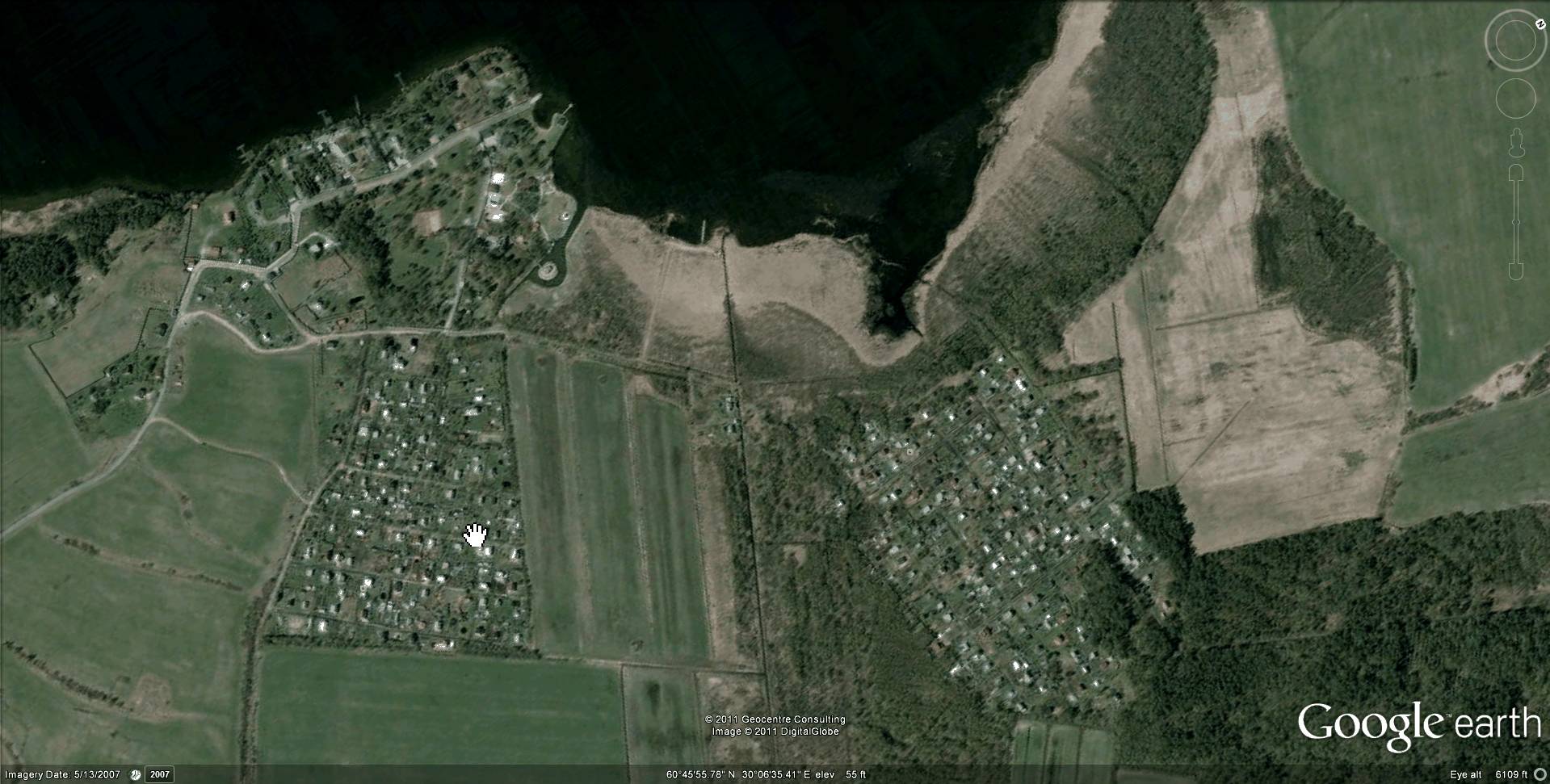
I speculate that one or both of these compounds on the southeastern shore of Lake Komsomolskoye is “The Ozero”. Click on the picture for greater detail.

By now, its shareholders have assumed top positions in Russian government and business. As of 2008, Vladimir Putin is the Prime Minister of the Russian Federation, Vladimir Yakunin is the Head of Russian Railways, Andrei Fursenko is the Minister of Education and Science of the Russian Federation, Sergey Fursenko is a brother of Andrei Fursenko, the Director-General of Lentransgaz and the President of the Football Club Zenit (St. Petersburg), Yury Kovalchuk is the Head of the Board of Directors and a major shareholder of the Russia bank, Viktor Myachin is its former Director General (1995-1998, 1999-2004), Nikolay Shamalov and Vladimir Smirnov are prominent businessmen. (Source).

Putin’s Extended Family

Yevgeniya Albats did not dwell on this group, merely mentioning that “nephews” and others hold middle or higher level positions in the state government. The Internet does not quickly offer insight into Putin’s family, except for this from Wikipedia:

On 28 July 1983 Putin married Kaliningrad-born Lyudmila Shkrebneva, at that time an undergraduate student of the Spanish branch of the Philology Department of the Leningrad State University and a former Aeroflot flight attendant. They have two daughters, Mariya Putina (born 28 April 1985 in St. Petersburg) and Yekaterina Putina (born 31 August 1986 in Dresden). The daughters grew up in East Germany and attended the German School in Moscow until his appointment as Prime Minister. After that they studied international economics at the Finance Academy in Moscow. Vladimir’s cousin Igor Putin is a director of Master Bank.

Other methods of control are open to see. On 28 December 2004, the Los Angeles Times Wire Reports stated that “President Vladimir V. Putin set rules for naming Russia’s regional governors after pushing through a law that abolished their direct election. Putin signed the decree that gives the presidential chief of staff the task of drawing up and submitting lists of gubernatorial candidates to the president.” (Source: Putin Signs Decree on Naming of Governors).
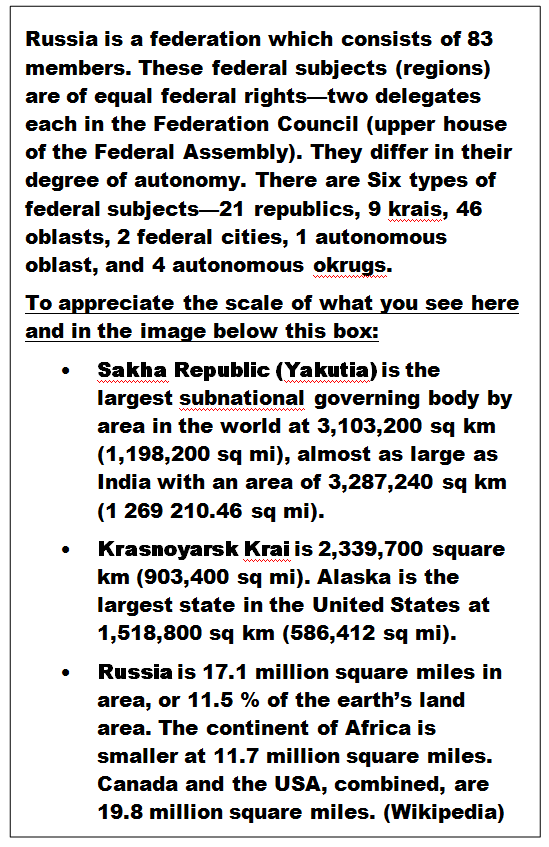
Russian Federation

Click on the images to view them more clearly

regions russia1

All the people who surround or are connected with Putin depend on him, in varying degrees, for maintaining their positions and lifestyle. Thus they have an interest in him staying in power. As Albats put it, “ it’s hard to break his spell over them” because they will lose power if he leaves the stage. And, by the nature of how he has gained power, he has trapped himself into continuing to do what he has been doing. He and his apparent stooge, Medvedev, have talked about reform, but little has been done in this regard.

Meanwhile, according to Albats: 2000 former business leaders are in labor camps and jails; 80% of all the top dogs in government are ex-KGB employees; the 83 regions keep only 30% of the taxes they collect and must send 70% to the Kremlin. The President of the Russian Federation is the effective ruler of every subordinate political jurisdiction.

In addition, Putin’s bullying of, and alleged murders of, independent commentators and journalists is notorious:

“The murder of Russian journalist Anna Politkovskaya in October 2006 shocked the world. ‘Yet for every Anna, there have been many less widely known journalists killed for their work across Russia,’ says the International Federation of Journalists (IFJ) in a groundbreaking report on the 313 Russian journalists killed since 1993.” (Source)
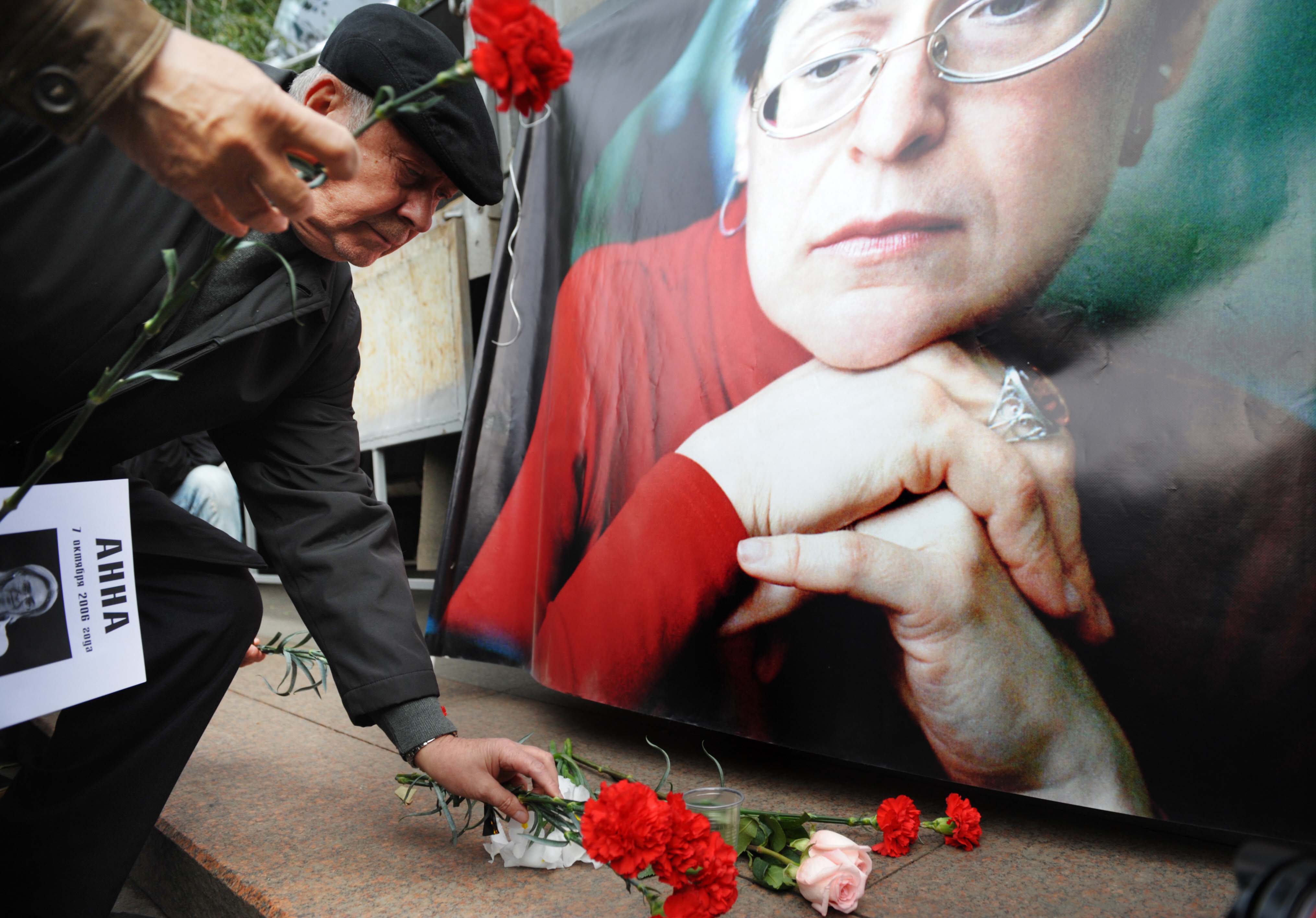
Russian human rights activists place flowers at a portrait of slain Russian journalist Anna Politkovskaya in Moscow on October 7, 2009 during a rally on the third anniversary of her death at the hands of an unknown gunman. (Source: http://www.lecourrierderussie.com/2011/08/25/)

Boris Nemtsov, former deputy prime minister of Russia and current opposition leader, suggested in a 2011 interview that only those in Ozero really support Putin any more: “Everyone is unhappy with Putin, save perhaps his closest friends, members of the so-called Ozero dacha cooperative […] In only a few years these fellows turned from medium-sized entrepreneurs into dollar billionaires. For example, the Kovalchuk brothers have seized power over Gazprom; the KGB veteran Gennady Timchenko is now a trader who controls 40 percent of all crude oil exports; Putin’s former (martial arts) coaches, the Rotenberg brothers, continue to get lucrative contracts, and there are a few more people like this.” (Source).

In concluding her formal remarks, Yevgeniya Albats said these things (from my written notes):

Despite everything she has “hope”, but this is in her nature. People are getting sick and tired of seeing the same old faces in positions of power on TV and elsewhere. Rural people are offended by Putin’s “coming back”. Young people are angry at Putin’s announced return and are wondering whether to leave Russia. Only 36% of the people have access to the Internet, but as more come on line they will be able to connect with others who are dissatisfied with the regime.

The program ended with remarks from a panel of experts:

· Lena Jonson, Head of the Russia Research Program at the Swedish Institute of International Affairs

· Carolina Vendil Pallin, Head of the Russia Research Programme at the Swedish Defence Research Agency

· Torbjörn Becker, Director, Stockholm Institute of Transition Economics

· The moderator was Nathalie Besèr, Advisor to the Swedish Institute of International Affairs

Lena Jonson addressed the issue of Russian stagnation because its closed system is resistant to change. She asked Albats her opinion on the likely source of the possible collapse of the Putin regime. Albats responded by saying that there will likely be a confrontation over control of resources, especially form the trade unions, and, there are signs of cleavages inside the elite groups. There are no institutional avenues to accommodate necessary change, therefore action in the street such as currently in Tunisia and Egypt becomes more likely.

Carolina Vendil Pallin focused on the writings of the elite, especially through blogs. She sees that these elite feel “humiliated” by Putin’s actions and style of governance. She sees that growing Internet accdess wil play an important role in creating necessary change. (Personal Note: the Samizdat in the Soviet Union and European communist eastern states played a similar role).

Albats agreed and said that the PR of the Kremlin is out of synch with the rest of society. She said that Putin is aware of this but seems powerless to bridge the gap. He has tried shallow things such as trying to appear more youthful, through plastic surgery and public display of his athleticism, but these are not working. More than anything, there is loss of confidence in public institutions, especially the judiciary.

This could all lead to a collapse of the state, “which would be dangerous to other people, including you guys” (indicating the audience of, mostly, Swedes.

Torbjörn Becker pointed out that Russia looks “relatively OK economically” and still has general political support as a result. Albats agreed that economic times were (relatively) good in Russia right now, but Putin will not reform. She cited others who have heard Putin say that once you start reform, there is no way back, and he (Putin) used Mikhail Gorbachev (the last head of state of the Soviet Union) as an example as what he did not want to do. The growing middle class will put pressure on the current system to reform. The Russian economy has improved due mostly from the rise in the market price of crude oil. The grass roots issue is not economic, but one of representation.

Some final remarks by Yevgeniya Albats in response questions from the audience’s questions:

Putin sees the West as Russia’s enemy, especially the USA.

Putin wants to re-create the Imperial Empire, but it is not possible because of resistance in the “Stans” (Kazakhstan, Kyrgyzstan, Tajikistan, Turkmenistan, Uzbekistan).

Despite her native optimism, Yevgeniya Albats is afraid that Russia has lost its opportunity to change peacefully.
Posted in Russia | Tagged , , , , , , , , , , | 10 Comments

Cicero and Cato vs. Caesar; Caesar vs. Pompey; Caesar Wins All, Then is Murdered

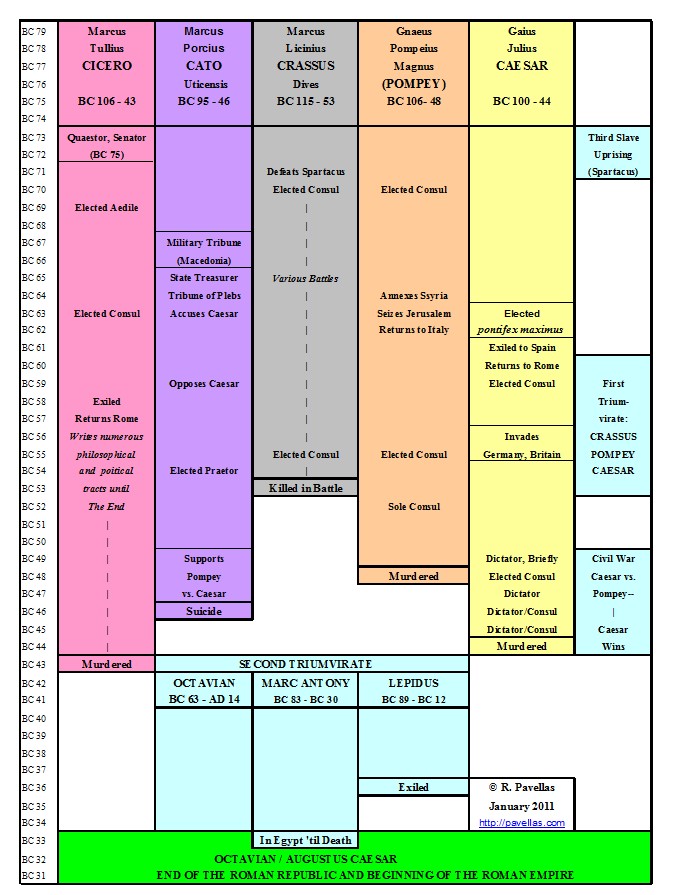
Conspirata: A Novel of Ancient Rome by Robert Harris is amply reviewed, under this link,  in the New York Times.  My contribution in this article is to bring the book and the times to your attention and to offer a simple timeline of major players at the end of the Roman Republic and the beginning of the Roman Empire. (Click on the following link to get a PDF file of the chart in the image below: Roman Republic Ends; you may use this image if you give me credit at http://pavellas.com)

Roman Republic timeline

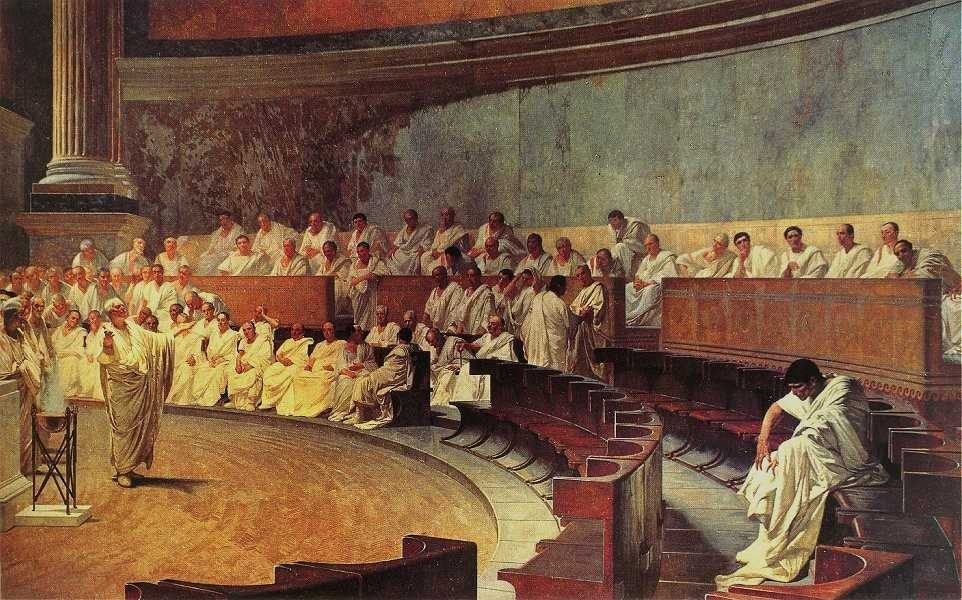
The Roman Senate

At the center of the book is the Roman Senate.  Outside Rome are the provinces, and the battles led by Caesar, Crassus and Pompey, among others, to add even more territory to the nascent Empire.

The Roman Senate was different from what we see in the US Senate:

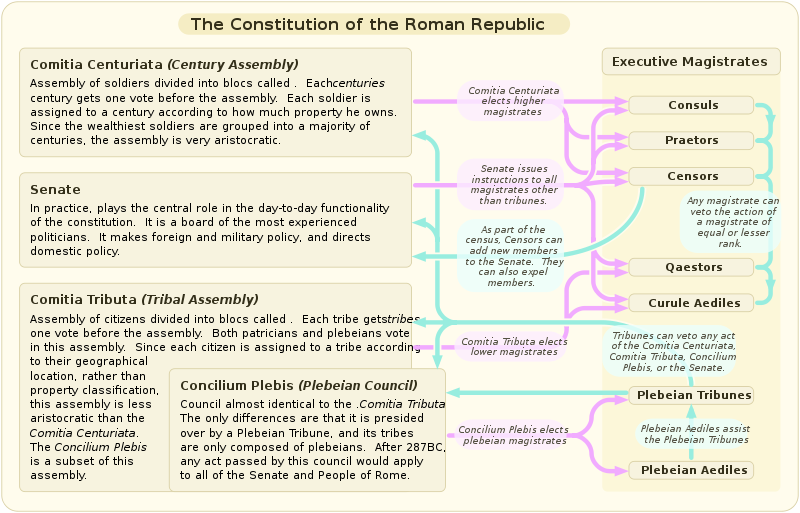
The senate passed decrees called senatus consultum, which in form constituted “advice” from the senate to a magistrate. While these advices did not hold legal force, they usually were obeyed in practice.

The senate directed the magistrates, especially the Roman Consuls (the chief-magistrates) in their prosecution of military conflicts. Only the senate could authorize the disbursal of public funds from the treasury. As the empire (NB: not yet Empire) grew, the senate also supervised the administration of the provinces, which were governed by former consuls and praetors, in that it decided which magistrate should govern which province.

The senate also played a pivotal role in cases of emergency. It could call for the appointment of a dictator (a right resting with each consul with or without the senate’s involvement). However, after 202 the office of Dictator fell out use (and was revived only two more times) and was replaced with the senatus consultum ultimum (“ultimate decree of the senate”), a senatorial decree which authorized the consuls to employ any means necessary to solve the crisis.

The senate operated while under various religious restrictions. For example, before any meeting could begin, a sacrifice to the gods was made, and a search for divine omens (the auspices) was taken.

Representation of a sitting of the Roman Senate: Cicero attacks Catilina, from a 19th century fresco in Palazzo Madama, Rome.

Meetings usually began at dawn, and a magistrate who wished to summon the senate had to issue a compulsory order. The senate meetings were public, and were directed by a presiding magistrate, usually a Consul. While in session, the senate had the power to act on its own, and even against the will of the presiding magistrate if it wished. The presiding magistrate began each meeting with a speech, and then referred an issue to the senators, who would discuss the issue by order of seniority. Senators had several other ways in which they could influence (or frustrate) a presiding magistrate. For example, all senators had to speak before a vote could be held, and since all meetings had to end by nightfall, a senator could talk a proposal to death (a filibuster or diem consumere) if he could keep the debate going until nightfall. When it was time to call a vote, the presiding magistrate could bring up whatever proposals he wished, and every vote was between a proposal and its negative. At any point before a motion passed, the proposed motion could be vetoed, usually by a tribune. If there was no veto, and the matter was of minor importance, it could be voted on by a voice vote or by a show of hands. If there was no veto, and the matter was of a significant nature, there was usually a physical division of the house, with senators voting by taking a place on either side of the chamber.

The ethical requirements of senators were significant. Senators could not engage in banking or any form of public contract. They could not own a ship that was large enough to participate in foreign commerce, and they could not leave Italy without permission from the senate. Senators were not paid a salary. Election to magisterial office resulted in automatic senate membership. (Source)

800px-Roman_constitution.svg

(Source).

All the the constitutional and latent powers of the Senate were used by the various players and factions to further their interests and, for some, their quest for ultimate power. Caesar was a master in this realm. The book shows that certain alliances, and the power they created, were obtained through marriage between influential families, where women were the pawns in these maneuvers.

After reading this book, I accessed the Internet to  get a larger picture of the events during the 40 years of Roman history it covers. What follows is a recapitulation of some of my reading. I choose to juxtapose Cicero and Cato, the scholars and intellectuals (as well as politicians) dedicated to order and process, against Caesar, the soldier-politician dedicated to accruing power to build the empire he intended to lead.

Marcus Tullius Cicero

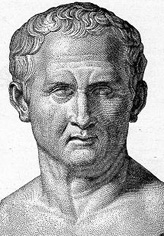
Marcus Tullius Cicero (106—43 BCE)

Cicero was an orator, lawyer, politician, and philosopher. Significantly, he was not a soldier; he detested warfare and violence. Although known as a philosopher, he placed politics above philosophical study. The only periods of his life in which he wrote philosophical works were the times he was forcibly prevented from taking part in politics. He was murdered on December 7, 43 BC.

Cicero’s political career was a remarkable one. At the time, high political offices in Rome, though technically achieved by winning elections, were almost exclusively controlled by a group of wealthy aristocratic families that had held them for many generations. Cicero’s family, though aristocratic, was not one of them, nor did it have great wealth. But Cicero had a great deal of political ambition; at a very young age he chose as his motto the same one Achilles was said to have had: to always be the best and overtop the rest. Lacking the advantages of a proper ancestry, there were essentially only two career options open to him. One was a military career, the other a career in the law.

To prepare for the latter career he studied jurisprudence, rhetoric, and philosophy. Cicero proved to be an excellent orator and lawyer, and a shrewd politician. He was elected to each of the principle Roman offices (quaestor, aedile, praetor, and consul) on his first try and at the earliest age at which he was legally allowed to run for them. Having held office made him a member of the Roman Senate.

During his term as consul (the highest Roman office) in 63 BC he was responsible for unraveling and exposing the conspiracy of Catiline, which aimed at taking over the Roman state by force, and five of the conspirators were put to death without trial on Cicero’s orders. Cicero was proud of this, claiming that he had single-handedly saved the commonwealth. Cicero enjoyed widespread popularity at this time – though his policy regarding the Catilinarian conspirators had also made him enemies, and the executions without trial gave them an opening.

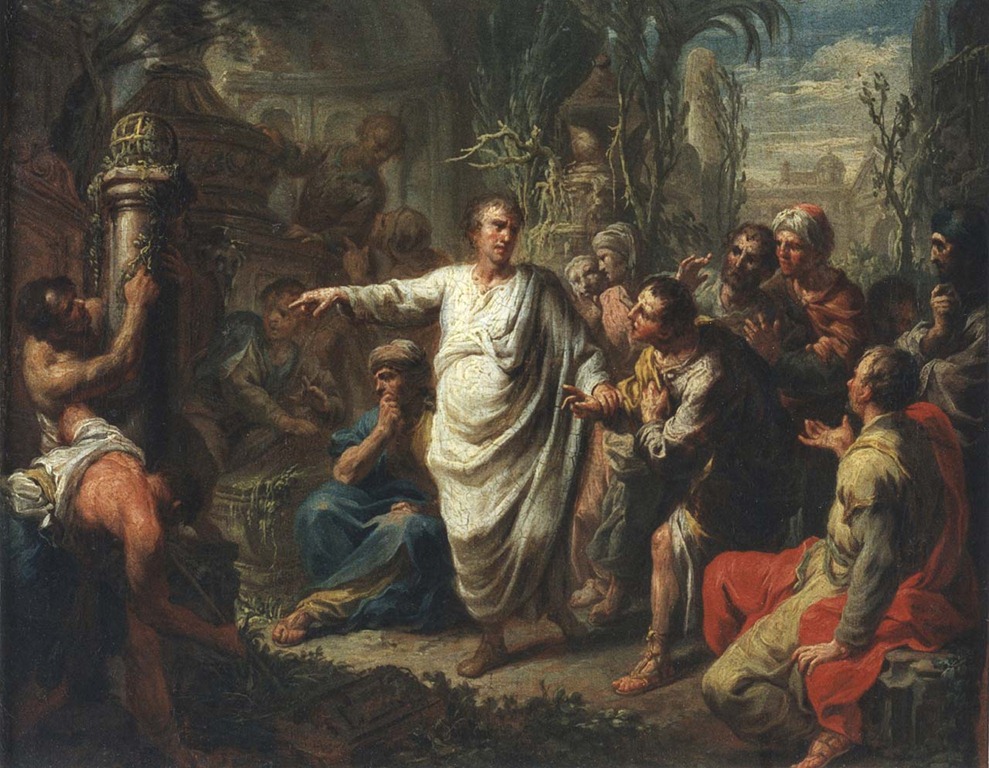
Cicero discovering the tomb of Archimedes by the Austrian baroque painter Martin Knoller (1725-1804)

In 60 BC Julius Caesar, Pompey, and Crassus (the First Triumvirate) combined their resources and took control of Roman politics. Recognizing his popularity and talents, they made several attempts to get Cicero to join them, but Cicero hesitated and eventually refused, preferring to remain loyal to the Senate and the idea of the Republic. This left him open to attacks by his enemies, and in January of 58 BC the tribune Clodius (a follower of Caesar’s), proposed a law to be applied retroactively stating that anyone who killed a Roman citizen without trial would be stripped of their citizenship and forced into exile. The law passed. Cicero was forbidden to live within 500 miles of Italy, and all his property was confiscated. This exile provided the time for his first period of sustained philosophical study. After the political conditions changed, his property was restored to him, and he was allowed to return to Rome, which he did to great popular approval, claiming that the Republic was restored with him.

Cicero owed a debt to the triumvirate for ending his exile (and for not killing him), and for the next eight years he repaid that debt as a lawyer. Because he still could not engage in politics, he continued his studies of philosophy.

The triumvirate collapsed with the death of Crassus. In 49 BC Caesar crossed the Rubicon River, entering Italy with his army and igniting a civil war between himself and Pompey. Cicero was on Pompey’s side, though halfheartedly. He felt that at this point the question was not whether Rome would be a republic or an empire but whether Pompey or Caesar would be Emperor, and he believed it would be a disaster in either case. Caesar and his forces won in 48 BC, and Caesar became the first de facto Roman emperor. He gave Cicero a pardon and allowed him to return to Rome in July of 47 BC, but Cicero was forced to stay out of politics. Most of the rest of his life was devoted to studying and writing about philosophy.

After Caesar’s assassination in 44 BC, Cicero again returned to politics. Hoping to see a restoration of the Republic, he supported Caesar’s adopted son, Octavian (later called Augustus) in the initial stages of Octavian’s power struggle with Marc Antony. But in this case, Cicero had chosen sides too soon: Octavian and Antony were temporarily reconciled, and Cicero was proscribed as an enemy of the state and murdered on December 7, 43 BC. (Major Source).

Marcius Porcius Cato Utensis

PortiaCato

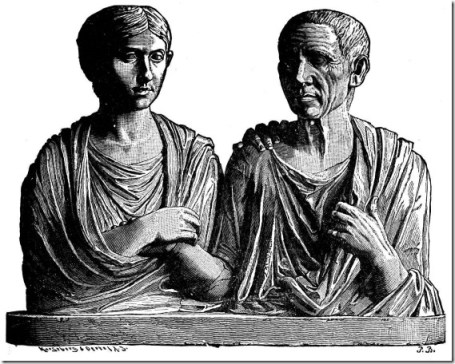
Cato (right) and his daughter, Porcia, who married Brutus, one of Caesar’s assassins (et tu brute?). 

Cato the Younger was a Roman political figure whose opposition to Pompey and Caesar helped hasten the collapse of the Roman Republic.

Orphaned when a child and raised in the house of his uncle M. Livius Drusus, the reformer, Cato early cultivated habits of austerity and made a great show of political and moral probity. After serving as military tribune in Macedonia (67-66 B.C.), he toured Asia to prepare himself for public life. As quaestor, or minister of finance, Cato was notable for his punishment of corrupt treasury clerks and the strict rectitude of his accounts. But he was not free of favoritism. As tribune elect in 63, he prosecuted for electoral bribery one of the men who defeated Catiline for the consulship, exempting the other because he was a relative.

Cato’s fiery speech on December 5 led the Senate to vote for the execution of the Catilinarian conspirators who had been caught in Rome after an unsuccessful attempt at seizing control of the state. As tribune in 62, Cato blocked attempts by Metellus Nepos and Julius Caesar to recall Pompey to deal with Catiline and his army in Etruria.

When Pompey returned from the East, Cato led the senatorial opposition against him. He also outraged Crassus and the equestrians by refusing to allow reconsideration of the tax contract for Asia. The result was the formation of the First Triumvirate by Pompey, Crassus, and Caesar to attain their political ends. During Caesar’s consulship in 59 Cato bitterly opposed the triumvirate’s bills for the redistribution of land and the grant of an extraordinary command to Caesar. So violent were Cato’s tactics that Caesar at one point had him imprisoned only to think better of it later. In the following year the triumvirs rid themselves of Cato by offering him a special command in Cyprus. Though Cato was aware he was being removed from the center of power, his exaggerated sense of duty made it impossible for him to refuse.

When he returned to Rome in 56 B.C., he attempted to block the election of Pompey and Crassus to their second consulship. They therefore prevented Cato’s election to the praetorship, for which he had to wait until 54. To check the rioting and anarchy which developed in 53 and 52, Cato supported the proposal of the senatorial leaders to make Pompey sole consul. Thereafter he continued to back Pompey but only as a counterforce to the growing power of Caesar. Because Cato refused to cultivate the great politicians, he failed to win the consulship for 51.

In the civil war between Pompey and Caesar, Cato chose Pompey and was given command in Sicily, which he evacuated after the arrival of the Caesarian forces in order to avoid bloodshed. He garrisoned Dyrrachium for Pompey during the Battle of Pharsalus and after Pompey’s defeat joined the Pompeian refugees in Africa. There he refused military command because he had not held the consulship but took charge of the city of Utica (whence he derived his surname) and organized its defenses. When Caesar crushed the Pompeians in the Battle of Thapsus in 46 and approached the city, Cato committed suicide.

After his death Cato became a symbol of republicanism in the continuing struggle against Caesar, Antony, and Octavian. But during his lifetime his conservatism and obstructionism served only to strengthen the forces he opposed. (Source)

Gaius Julius Caesar, 102 B.C.-44 B.C.

Julius Caesar paved the way both for the end of the republic and the creation of the empire under his nephew Octavian, or Augustus Caesar. As a general he led military operations in Britain and elsewhere, and as dictator of Rome, he put through valuable reforms. But his actions, including his celebrated affair with Cleopatra, earned the distrust even of his closest friends, who conspired in his assassination.

Caesar was born on July 13, 102 B.C., to an aristocratic but not wealthy family. During his childhood, Rome was caught in a struggle between the aristocratic party, led by Sulla (137-78 B.C.), and the popular party, which—though its members were aristocrats as well—favored a greater distribution of power. With his aunt Julia’s marriage to the popular party leader, Marius (c. 157-86 B.C.), Caesar became linked with that faction, and he further increased his standing by marrying Cornelia (d. 67 B.C.), daughter of Marius’s ally Cinna (d. 84 B.C.) They later had a daughter, Julia.

Sulla established a dangerous example, one Caesar himself would later imitate, when in 88 B.C. he marched his troops into Rome. This ultimately meant the end of Marius’s power, and Sulla demanded that Caesar divorce Cornelia. Caesar refused, and had to go into hiding. His mother’s family convinced Sulla to relent, and Caesar returned to Rome and entered the army.

While serving in Asia Minor in 80 B.C., Caesar earned a high military decoration for bravery in the battle to take Mitylene on the isle of Lesbos, and went on to take part in a war against pirates from Cilicia. Following the death of Sulla, Caesar went back to Rome in 77 B.C., but soon after earning a name for himself as prosecutor in an important legal case, he traveled to Rhodes for further training in rhetoric. On the way, he was captured by Cilician pirates and held for ransom. After his release, he led a force to victory against the pirates, then—without being commanded to do so—led a successful attack against Mithradates of Pontus (r. 120-63 B.C.). Soon after this, he gained his first elected office as military tribune.

Cornelia died in 67 B.C., and within a year, Caesar remarried. Again the marriage had a political angle: Pompeia was the granddaughter of Sulla, and Caesar wanted to establish closer ties with Crassus (c. 115-53 B.C.), a leading figure in the aristocratic party.

To get ahead in Rome, a politician had to spend money on bribes and lavish entertainments for fellow politicians and the Roman citizens. As aedile, a type of magistrate responsible for all manner of public affairs, Caesar heavily outspent his colleague Bibulus (d. 48 B.C.), sponsoring the most magnificent set of gladiatorial games Rome had ever seen. Later, he obtained a position as governor in Spain, where he made back all the money he had spent—probably by means that were less than honorable.

Meanwhile Pompeia became involved in scandal when a character named Pulcher got into an all-female party at her house disguised as a woman. Caesar promptly divorced her. He was soon elected consul with Bibulus, but by then it was clear that only three men in Rome really mattered: Caesar, Crassus, and Pompey (106-48 B.C.)

The latter had just returned from his defeat of Mithradates, and together the three formed the First Triumvirate in 60 B.C. Pompey even married Caesar’s daughter Julia to solidify their bond, but despite their mutual claims of loyalty, the alliance was an uneasy one.

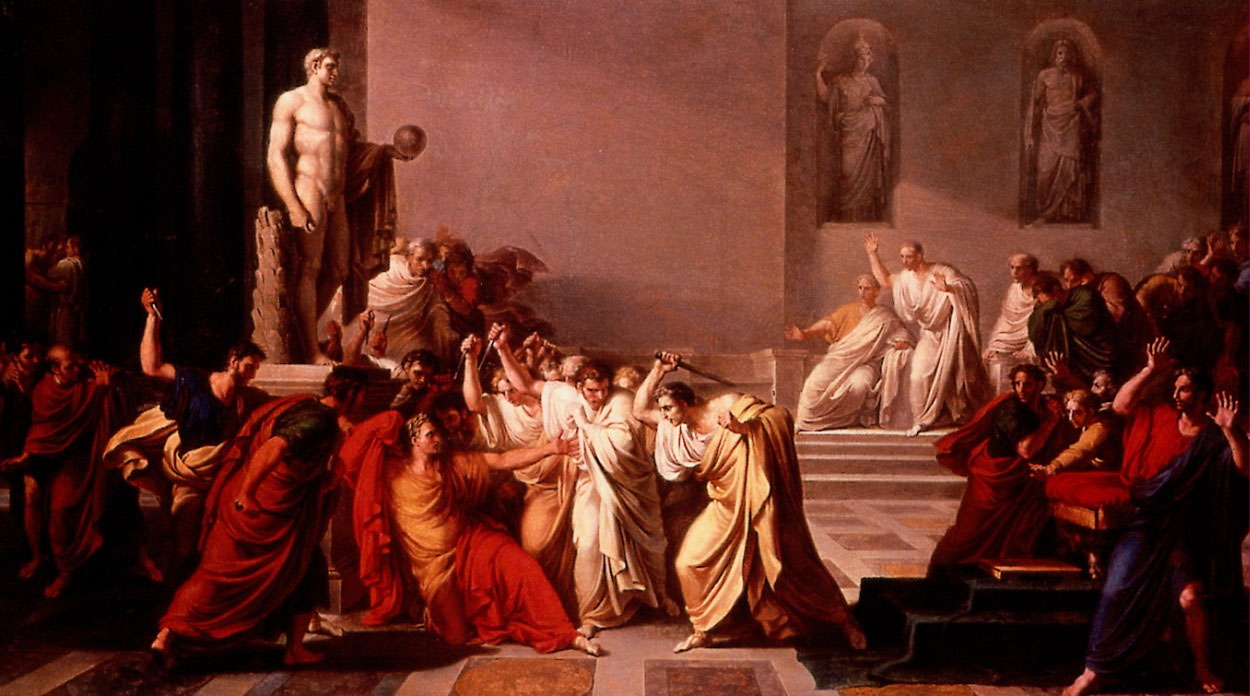
Death of Caesar by Vincenzo Camuccini

The conflict would be delayed for many years, however, while Caesar went to Gaul. Anxious to gain military glory, he went looking for awar, and he soon had one when the Helvetii, from what is now Switzerland, tried to cross Gaul without permission. He drove them back, then dealt with the Suebi from Germany. Next, as a means of preventing the Celts of Britain from aiding their cousins on the mainland, he led the first Roman invasions of that island in 55 and 54 B.C. In the course of these campaigns, Caesar killed perhaps a million people, but eventually placed all of Gaul firmly under Roman control.

Julia died in 54 B.C., breaking the bond between Caesar and Pompey, and in the following year, Crassus was killed in Asia. Soon Pompey ordered Caesar back to Rome, and Caesar, knowing he would be killed if he went back alone, brought his army with him. By crossing the River Rubicon, a shallow stream which formed the boundary between Cisalpine Gaul and Italy, he passed a point of no return, making conflict with Pompey inescapable.

Pompey moved his forces to Greece in order to regroup, while Caesar defeated Pompey’s legions in Spain. The two met in battle at Pharsalus in Greece in 48 B.C., and though Caesar’s armies won, Pompey managed to escape. He fled to Egypt, where he was killed, and Caesar, hot in pursuit, soon had his attention diverted by Cleopatra (69-30 B.C.). They began a romance, and Caesar aided her in war against her brother, Ptolemy XII (r. 51-47 B.C.).

At the same time, Mithradates’s teenaged son Pharnaces (r. 63-47 B.C.), taking advantage of Caesar’s distraction in Egypt, had attempted to regain his father’s kingdom in Pontus. Caesar went to Asia Minor, and destroyed Pharnaces’s army in just five days. Afterward, he made his famous report of his victory: “I came, I saw, I conquered”; or in Latin, “Veni, vidi, vici.”

In 47 B.C. Caesar returned to Rome, where he assumed the powers of a dictator, and quickly pushed through a series of reforms. Most notable among these was his effort to reduce unemployment by requiring that every landowner hire one free man for every two slaves working in his fields. He increased the membership in the senate from 300 to 900, and included Celtic chieftains from Gaul in Rome’s legislative body.

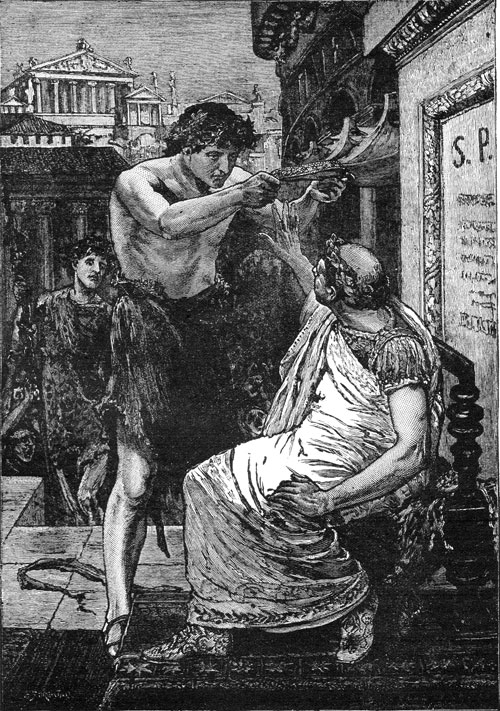
Marc Antony Offers Caesar the Crown

Marc Antony offers a king’s crown to Caesar, who refuses it

Caesar managed to combine the authority of numerous political offices, giving himself more power than any Roman leader had ever enjoyed; yet he seemed to want more. He placed his portrait on coins, an honor previously reserved only for the gods, and declared that the month of his birth would no longer be called Quintilis but “Julius” or July. Instead of standing before the senate when he spoke to them, as rulers had always done before, he sat—more like a monarch than a citizen. His junior colleague Mark Antony (82?-30 B.C.) even tried to convince him to wear a crown.

Had Caesar accepted the crown, it would have been such an offense to the Romans’ views on government that he would have been an instant target for assassination. As it was, assassination was not long in coming. Just before leaving for a campaign in Persia, Caesar planned to address the senate on the Ides of March, or March 15, 44 B.C. Unbeknownst to him, however, a group of some 60 influential Romans—led by his supposed friends Brutus (85-42 B.C.) and Cassius (d. 42 B.C.)—had joined forces to assassinate him. As he entered the senate chamber, the assassins jumped at him with daggers, stabbing him 23 times. It would fall to Caesar’s nephew Octavian (63 B.C.-A.D. 14) to avenge the murder, which he did on his way to assuming power and establishing what would become the Roman Empire. (Source)

Posted in Government & Politics, History | Tagged , , , , , , , , , | 3 Comments