Missy, Sissy and Stokes at the Iditarod

“Missy, Sissy and Stokes.”

Andy said this with such fervor it seemed his heart was about bursting through his puny chest, thought Gardner “Hutch” Hutchins as he made a record of the lead dogs for this team.

“We don’t usually record more than two lead dogs per team, but there ain’t a rule against it.”

“Missy is their mom, so they all get along. And anyway they take turns of course. One of ‘em is always on the sled to rest while the other two work.”

“OK, Andy, another unusuality, but no rule against it. Where ya’ from?”

“We’re from Stokes, Montana, right where the Mississippi River starts. That’s how the lead dogs got their names.”

Hutch could now understand the source of Andy’s passion and pride. “What’s your full name and age?”

“Well, I prefer Andy but my given name is Anders. Anders Andersson, with two esses, and don’t start makin’ wisecracks about Swedes and squareheads. I’ve got as much Irish in me as Scandihoovian and my Irish is a little touchy. My middle name is Aloysius. My mom has a sense of humor. I’m 23. This is my first time in Alaska. We’ve trained for two years, summer and winter, all in Itasca County, where Stokes is.”

“All right Andy. Your secret’s safe with me. Have you filled out the release and insurance forms and all that? Yeah, give ‘em here. How many dogs ya’ got, and what’s their names? I’ve already recorded Missy, Sissie and Stokes”

“They’re all named after some place in Itasca County: Effie, Jessie and Swannee. Swannee’s named after the Swan River. Spang, Bovey and Nash. Nash is from Nashwauk, but that’s too hard to say when I’m yellin’at ‘em. Inger, Birch and Bear, after Bearville. The rest are Morse, Kelly, Whiskey, Beaver, Mak, and Coon. The last six are the newest and youngest, but they’ve got great heart.”

“I don’t doubt it, Andy. They all do, don’t they? Let’s see, I count eighteen. One lead dog, sixteen behind her, or him—I guess Stokes is a male?—and one spare lead resting on the sled. Is that your plan?”

“You’ve got it.”

What’s your local address?”

“Itasca’s Sons of the Pioneers put me up at the Captain Cook Hotel, and it’s so grand I feel guilty. My God, what luxury. How can people stay hard and fit with all that?”

“They don’t, Andy. OK, that’s it. Thanks for the info. Oh, I almost forgot—who’s your contact back home?”

Hutch now saw Andy’s mood change swiftly. He seemed to be holding back tears.

“It’s my brother, Casey—he’s in Grand Rapids, the main city in Itasca County. It would’ve been Lorie, but she kicked me out of the house saying it was either the dogs or her. What a helluva choice to give a man just as he’s about to run the greatest race in world. And for the first time. But I ain’t gonna let that affect me, except maybe to prove somethin’ to her.

“Women in the Lower 48 just don’t understand,” said Ralph with some anger in his voice. “Andy, I hope you don’t mind hearing some advice from me.”

“Go ahead Hutch, you’re old enough to be my Pop and I always listened to him.”

“Just get out there on the trail to Nome and don’t think about anybody or anything but your dogs and how much you’re enjoying yourself. Like you said, it’s the greatest race in the world, and there’s very few who run it.”

“I’m enjoying myself already, and your advice has solved a problem for me.

“How’s that?”

“I’ve pretty much used up all the names around Stokes for my dogs, and now I know what I’m gonna name the next pup.

“Okay, I’ll bite, what’s the name, Andy.

“Hutch.”
Posted in Short-short Stories | Tagged , | Leave a comment

Is Man, Indeed, Like the “Slime Mold…”

…as Loren Eiseley states in his book The Invisible Pyramid?

It came to me in the night, in the midst of a bad dream, that perhaps man, like the blight descending on a fruit, is by nature a parasite, a spore bearer, a world eater. The slime molds are the only creatures on the planet that share the ways of man from his individual pioneer phase to his final immersion in great cities. Under the microscope one can see the mold amoebas streaming to their meeting places, and no one would call them human. Nevertheless, magnified many thousand times and observed from the air, their habits would appear close to our own. This is because, when their microscopic frontier is gone, as it quickly is, the single amoeboid frontiersmen swarm into concentrated aggregations. At the last they thrust up overtoppling spore palaces, like city skyscrapers. The rupture of these vesicles may disseminate the living spores as far away proportionately as man’s journey to the moon. [Source of quotation].

In that Dr. Eiseley was revered during his lifetime (1907 – 1977) for his scholarship in anthropology and his philosophical insights about man-in-Nature, we should pay attention to the creatures which he saw as metaphorically equivalent to humanity.

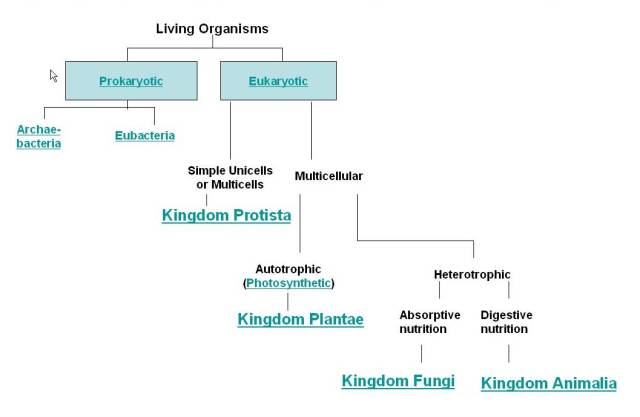
There are four kingdoms under the heading Eukaryotic organisms (all living organisms that are not bacteria, or Prokaryotic). You may be surprised to see that Fungi (mushrooms, for instance) are neither in the Plant Kingdom nor in the Animal Kingdom. They have their own kingdom, at least according to current taxonomy.

This leaves the Protist Kingdom which is reserved for any living thing, outside of bacteria, that is not in the other three kingdoms. This is where we find the slime molds.

(Note: Viruses are not considered living organisms)

Slime Molds (or Mycetozoa) is a broad term often referring to roughly six groups of Eukaryotes. The taxonomy is still in flux. Originally, they were considered Fungi, but now they have been split into various groups:

Slime molds feed on microorganisms in decaying vegetable matter. They can be found in the soil, on lawns, and in the forest commonly on deciduous logs. They are also common on mulch or even in leaf mold which collects in gutters.

They begin life as amoeba-like cells. These unicellular amoebae are commonly haploid and multiply if they encounter their favorite food bacteria. These amoebae can mate if they encounter the correct mating type and form zygotes which then grow into plasmodia which contain many nuclei without cell membranes between them, which can become meters in size. One variety is often seen as a slimy yellow network in and on rotting logs. The amoebae and the plasmodia engulf microorganisms. The plasmodium grows into an interconnected network of protoplasmic strands.

Sporangia of Hemitrichia clavata © Jan Gaisler (treknature.com/members/honza/)

Within each protoplasmic strand the cytoplasmic contents rapidly stream. If one strand is carefully watched for about 50 seconds the cytoplasm can be seen to slow, stop, and then reverse direction. The streaming protoplasm within a plasmodial strand can reach speeds of up to 1.35 mm. per second which is the fastest rate recorded for any organism. When the food supply wanes, the plasmodium will migrate to the surface of its substrate and transform into rigid fruiting bodies. The fruiting bodies or sporangia are what we commonly see, superficially look like fungi or molds but they are not related to the true fungi. These sporangia will then release spores which hatch into amoebae to begin the life cycle again. [Source].

Now that we know more than we expected about slime molds, how about Loren Eiseley’s reference to them in connection with mankind?

In her book Toward a Dialogue of Understandings: Loren Eiseley and the Critique of Science, Mary Ellen Pitts states:

…Eiseley explores (the ecological ethic) through metaphors…(representing)  the interconnection of life forms… and (the) symbolic linking of historic time with the present to give a sense of cosmic time, and through the (example) of burning or oxidation as basic to life but also part of what human beings inflict on the green world…

Eiseley takes the Faust myth as a tutor structure–the human being reaching upward for more knowledge to be used as power. This reaching upward, the opposite of his recurrent reaching out toward other life forms or other human beings, is metaphorized in the slime mold that, having grown to a point of density at which it can no longer sustain life, thrusts upward a spore-bearing capsule carefully attuned to light, ruptures, and spreads its seed spores into new regions…

And in opposition to the single-minded pursuit of power through knowledge, the pursuit that brings Western society to the brink of spreading like slime mold through “capsules” borne by rockets, Eiseley draws on the essential visual philosopheme to meditate on the need for two “eyes,” the eye of science and the eye of the poet, in an attempt to find a balance, a dialogue between knowledge and power sought through one “eye” and knowledge and reflection sought through the other eye.

There is a clear message from Dr. Eiseley directly, and indirectly through Dr. Pitts’s interpretation of his writings, that the scientific and technological genie is out of the bottle, untamed (or without the balancing forces of the poetic “eye”) and dangerous to all life on earth. Something in man realizes this, which is why he reaches for the stars, just as the slime mold reaches beyond its current geography through its fruiting bodies and spore capsules.

Readers of science fiction will recognize this as a recurrent theme.


Two sources for exploration of slime molds in science and art:

The Slime Mold Collective

TED Talk: Heather Barnett on What humans can learn from semi-intelligent slime

Posted in Science & the Sciences | Tagged , , , , , , , , , , | 5 Comments