…and the Past Role of European Countries
Who am I to say this, and how dare I say it?
I am merely responding to the announcement made by the prize committee of The Mo Ibrahim Prize for Achievement in African Leadership that no prize will be awarded this year. The main web page of the parent organization describes the nature and origin of the prize:
The Ibrahim Prize recognises and celebrates excellence in African leadership. The prize is awarded to a democratically elected former African Executive Head of State or Government who has served their term in office within the limits set by the country’s constitution and has left office in the last three years.
The Ibrahim Prize consists of US$ 5 million over 10 years and US$ 200,000 annually for life thereafter. It is the largest annually awarded prize in the world. The Foundation will consider granting a further $200,000 per year, for 10 years, towards public interest activities and good causes espoused by the winner.
 In October 2006, Dr. Ibrahim launched the Mo Ibrahim Foundation to support good governance and great leadership in Africa. In 2007, Dr. Ibrahim stepped down as Chairman of Celtel International to concentrate on this initiative.
Founded in 1998, Celtel International has brought the benefits of mobile communications to millions of people across the African continent. The company operates in 15 African countries, covering more than a third of the continent’s population, and has invested more than US$750 million in Africa. In 2005, Celtel International was sold to MTC Kuwait for $3.4 billion.
Before I tell you of the past winners of this prize, I want to draw a picture for you of the grievous state of governance and leadership throughout the continent of Africa by calling attention to a few historical and present facts and factors.
Facts on Africa
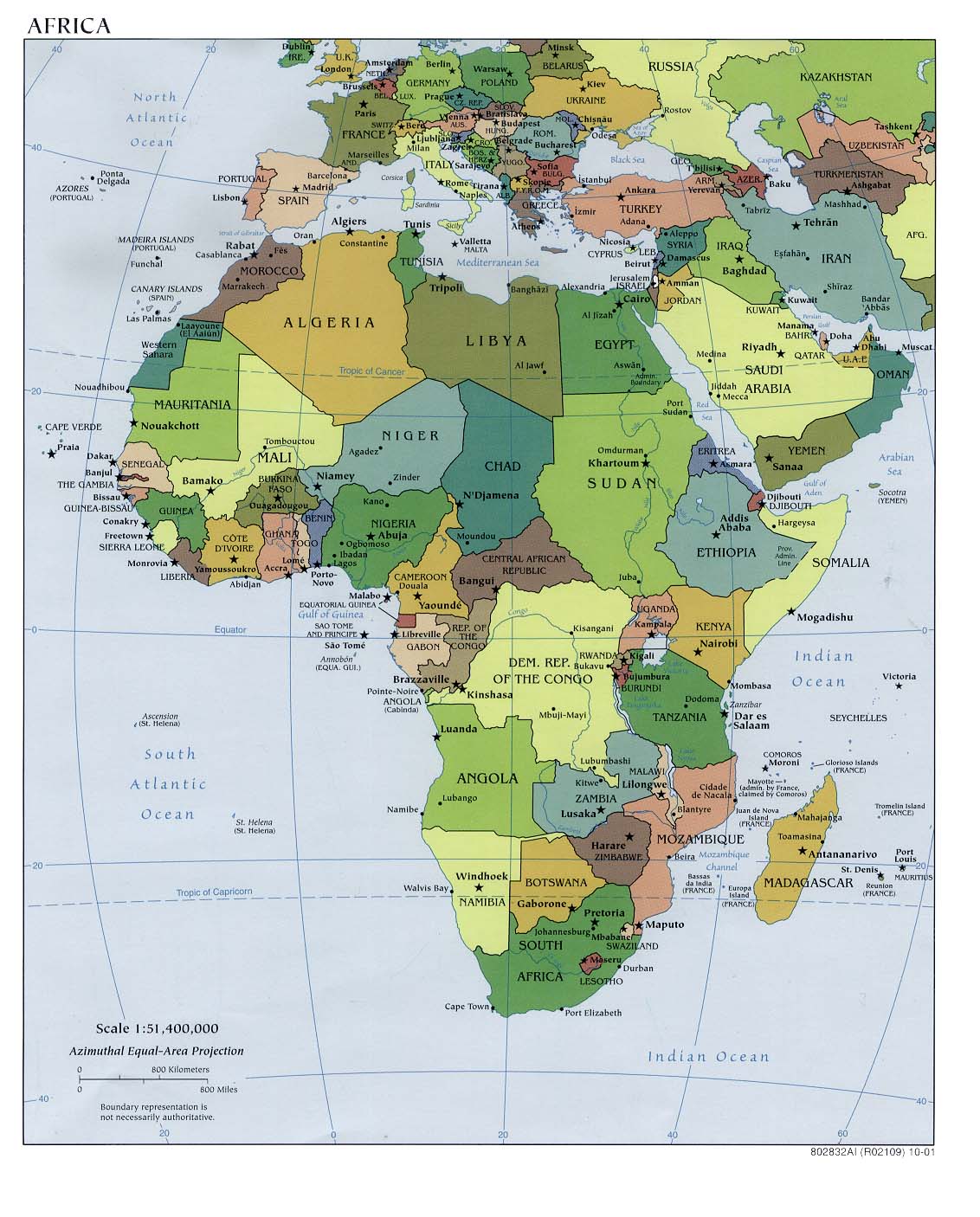
There are 53 internationally recognized countries in the continent of Africa, including the six island states of: Cape Verde, Comoros, Madagascar, Mauritius, São Tomé and Príncipe, and Seychelles.
Of these 53 states, 52 are former colonies of, or protectorates of, or were occupied by, one or more of several states in Europe: Belgium, France, Germany, Great Britain, Italy, Netherlands, Portugal and Spain. The only country not so colonized or dominated, Liberia, was settled by freed slaves from the USA, its territory having been expropriated in 1822 from the many local tribes who had not formed a nation state.
The total population of the 53 countries in 2008 was over 929 million.
- Seven of the 53 countries contain over 51% of the continent’s population: Democratic Republic of the Congo, Egypt, Ethiopia, Nigeria, South Africa, Sudan and Tanzania.
- Only six of the countries have annual Gross Domestic Product (GDP) per person greater than the world average of US $10,400. (GDP is a proxy for standard of living, rather than a direct measure of it): Equatorial Guinea, Seychelles, Libya, Gabon, Botswana, Mauritius.
[Note: Detailed information about any country in the world is easily available at the CIA World Factbook].
To get a notion of the relative poverty of living even at the world average GDP per person per year of US $10,400, here are the figures (in US Dollars) of the top 20 countries and the European Union, which has 27 countries in its membership:
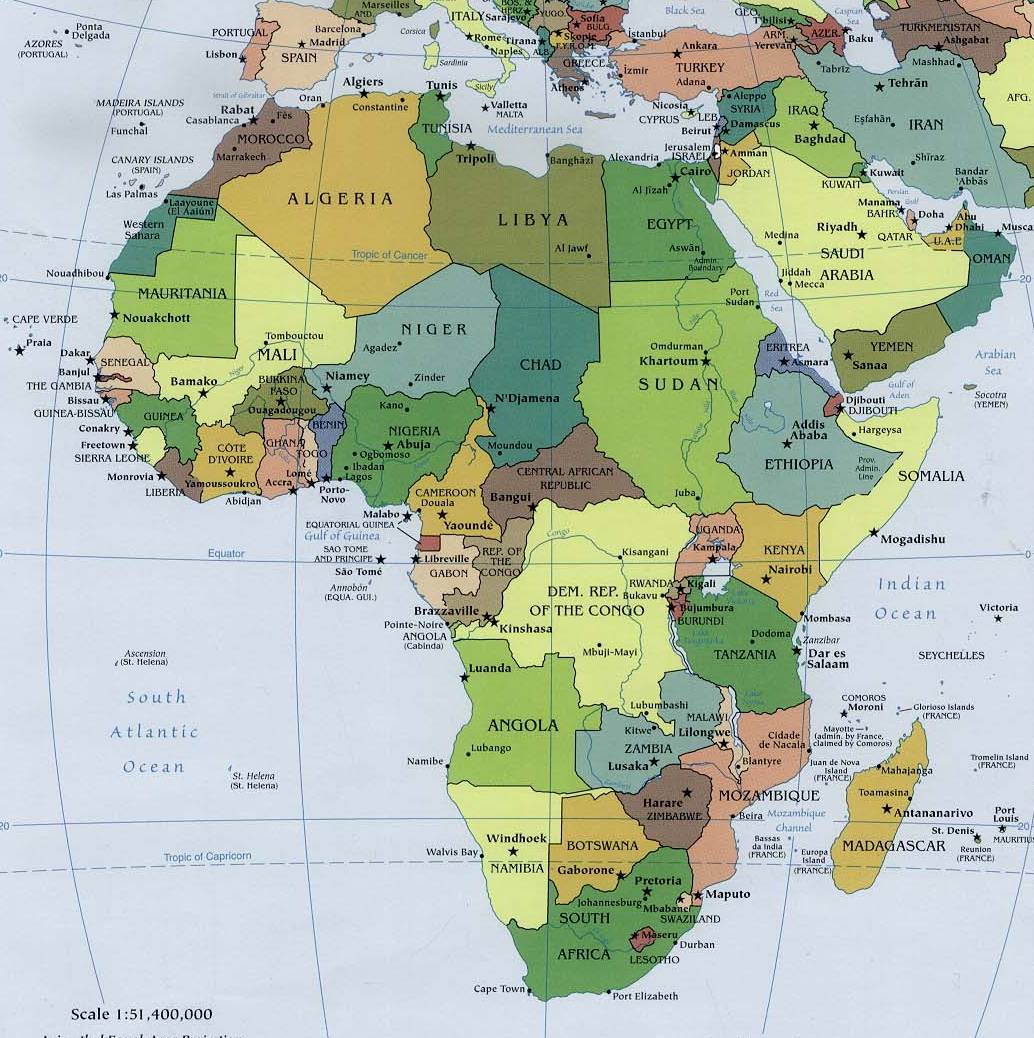
- Fifty-two of the world’s 192 countries have a GDP/person below $2,300 per year. Thirty-six of these countries are in Africa. Think of it: on average, the 689 million people in these 36 African countries subsist at a level approximately 7%, and less, of that enjoyed by the average person in a European Union country. The savagely-led country of Zimbabwe is at $200 per person per year. Zimbabwe’s dictator, President Robert Gabriel Karigamombe Mugabe, has been in power for almost 30 years, ever since the predecessor country, Rhodesia, was overthrown.
As mentioned above, every one of Africa’s countries, except Liberia, has been, at one time or another and in varying degrees, a vassal state of one or more European countries. It is well known that, with some exceptions, these states, while under foreign domination, were stripped of natural resources and essentially plundered. The stripping of natural resources continues in most of these countries today, with relatively few examples where a diversified economy under true democratic rule obtains.
Of the six countries currently at a GDP level above the world average, most are still extracting minerals from the soil as the major part of their economy: oil, diamonds, manganese, timber.
It is well known that the world’s major economies have poured money and aid into Africa, to no lasting effect, again with a few exceptions. This, in my view, shows the futility of sending money and goods into countries to help people who are ruled by despots and thieves.
Dr. Mo Ibrahim has the better idea, in my view. As can be seen above and under the links provided, his foundation will reward with significant money and recognition those African leaders who turn away from pillage and one-man rule, toward democracy that is not merely in name only; and, toward raising the standard of living for the people through good husbandry of resources and in diversifying the economy.
The prize has been awarded since 2007. Here are the awardees (text and photos taken directly from the foundation’s website):
Joaquim Alberto Chissano, 2007—Mozambique
In 1992, President Chissano helped to end Mozambique’s 16-year civil war and reconcile a divided nation, working tirelessly to negotiate piece with the RENAMO (Resistência Nacional Moçambicana) rebel group. To cement the reconciliation President Chissano offered 15,000 places in Mozambique’s 30,000-strong army to former opposition RENAMO soldiers.
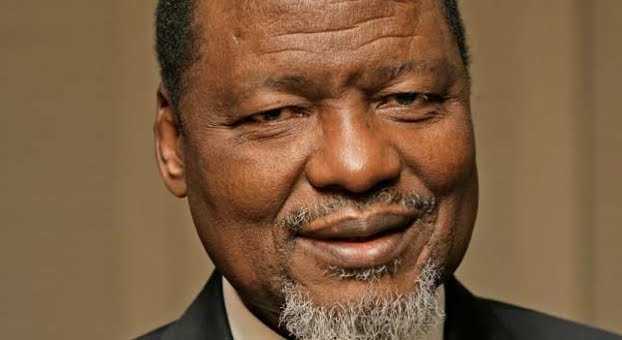 President Chissano implemented a deliberate shift from Marxist-Leninist ideology to multiparty democracy and a mixed economy. He successfully negotiated a reduction in Mozambique’s debt repayments and oversaw reforms that have led to sustained economic growth. During his time in office, Mozambique began the journey of reconstruction and development, with improvements in healthcare, increased access to education and greater empowerment of women.
Between 2003 and 2004, President Chissano served as Chair of the African Union. During his presidency he was a powerful advocate for Africa on the international stage, particularly in promoting the debt relief agenda.
Festus Gontebanye Mogae, 2008—Botswana
At his inauguration ceremony in 1998, President Mogae vowed to address poverty and unemployment. His time in office was characterised by programmes to develop education and health infrastructure, and to privatise parts of the economy, notably the airlines and telecommunications industry.
Under President Mogae’s stewardship of the economy and careful management of the country’s mineral resources, Botswana experienced the steady economic growth that has characterised its post-independence history. Having been one of the poorest African countries at the time of independence, President Mogae consolidated Botswana’s place as one of the most prosperous countries on the continent.
 After decades of enforcing strict anti-corruption measures, Botswana is regularly ranked as one of the least corrupt countries in Africa. Describing the principles that guided his time in office in his final State of the Nation address, President Mogae said that “prudent, transparent and honest use of national resources for your benefit has been my guiding principle and code of conduct”.
Following the Botswana Democratic Party’s victory in the October 2004 General Election, President Mogae was sworn in for a second term in November 2004. He again promised to fight poverty and unemployment, and pledged to halt the spread of HIV/AIDS in Botswana by 2016.
In April 2008, in accordance with Botswana’s constitution, President Mogae stepped down as President, having served two terms in government. He was succeeded by Seretse Khama Ian Khama.
Addendum
In the face of massive aid in money and goods perennially provided African people by other countries and NGOs through the governments of their respective countries, small and direct-to-the-people efforts pay off at least equally well. In the above photo showing orphans in Kenya, you will see Jacinta Njoroge Lahti, a native of Kenya and a resident of Sweden, who founded the depicted orphanage and school. She is a member of the Rotary Club of Stockholm International, which club continues to be a major supporter of the school.
Note on figures used in this article
All figures were derived from The CIA World FactBook.


 The Pavellas Perspective