
This was the title given to a presentation I attended, September 10, at the regular meeting of my Rotary club, the only English speaking Rotary club in Stockholm.
Dr. Tony Fang was the presenter. He is Associate Professor of International Business at Stockholm University, born in China and a resident of Sweden for many years.
To put the title and the substance of Dr. Fang’s presentation into perspective, one needs to review the first “cultural revolution” in China:
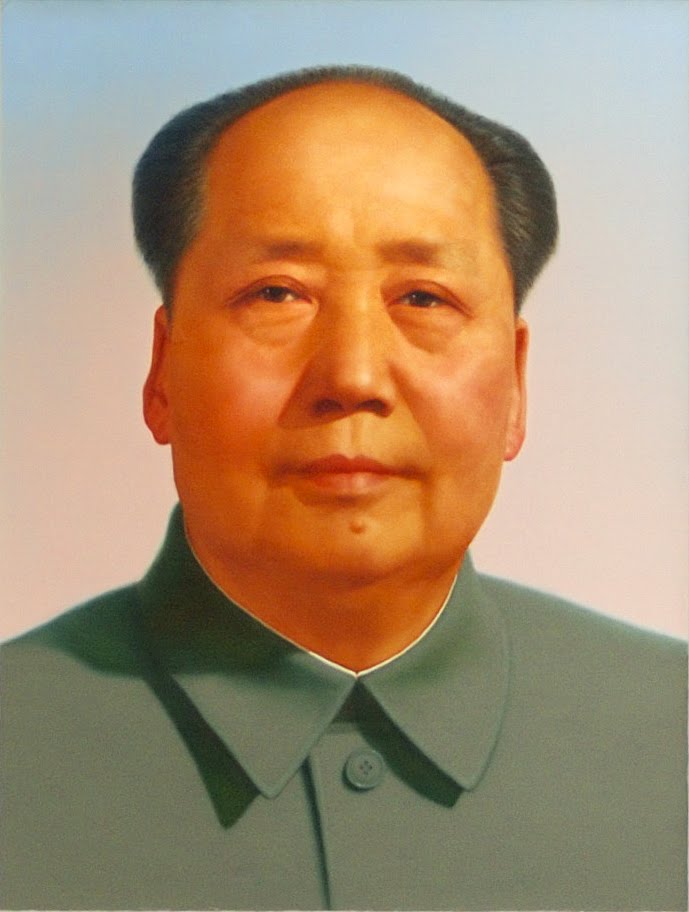
“The Great Proletarian Cultural Revolution“, or simply Cultural Revolution, was a period of social and political upheaval in the People’s Republic of China between 1966 and 1976, resulting in nation-wide chaos and economic disarray.
It was launched by Mao Zedong, the chairman of the Communist Party of China, on May 16, 1966, who alleged that “liberal bourgeois” elements were permeating the party and society at large, and wanted to restore Capitalism. He insisted that these elements be removed through post-revolutionary class struggle by mobilizing the thoughts and actions of China’s youth, who formed Red Guards groups around the country. The movement subsequently spread into the military, urban workers, and the party leadership itself. Although Mao himself officially declared the Cultural Revolution to have ended in 1969, today it is widely believed that the power struggles and political instability between 1969 and the arrest of the Gang of Four as well as the death of Mao in 1976 were also part of the Revolution.
After Mao’s death, the forces within Communist Party of China that were antagonistic to the Cultural Revolution gained prominence. The political, economic, and educational reforms associated with the Cultural Revolution were terminated. The Cultural Revolution has been treated officially as a negative phenomenon ever since. The people involved in instituting the policies of the Cultural Revolution were persecuted. In its official historical judgement of the Cultural Revolution in 1981, the Party assigned chief responsibility to Mao Zedong, but also laid significant blame on Lin Biao and the Gang of Four. [Source]
During the 33 years since Chairman Mao’s death in 1976, Chinese leaders started their country on a bumpy road toward embracing many of the values in the West that Mao reviled and forbade. Deng Xiaoping (1904-1997) was the key person in this transformation:
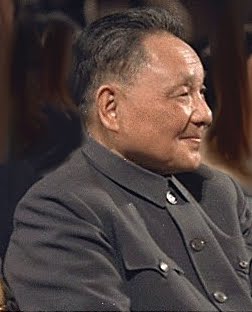
Inheriting a country wrought with social and institutional woes left over from the Cultural Revolution and other mass political movements of the Mao era, Deng became the core of the “second generation” of Chinese leadership. He is called “the architect” of a new brand of socialist thinking, having developed Socialism with Chinese characteristics and led Chinese economic reform through a synthesis of theories that became known as the “socialist market economy”. Deng opened China to foreign investment, the global market, and limited private competition. He is generally credited with advancing China into becoming one of the fastest growing economies in the world and vastly raising the standard of living. [Source]
Dr. Fang offered these eight points toward understanding the China of today, as compared with, just a short while ago, the China that most of us may remember:
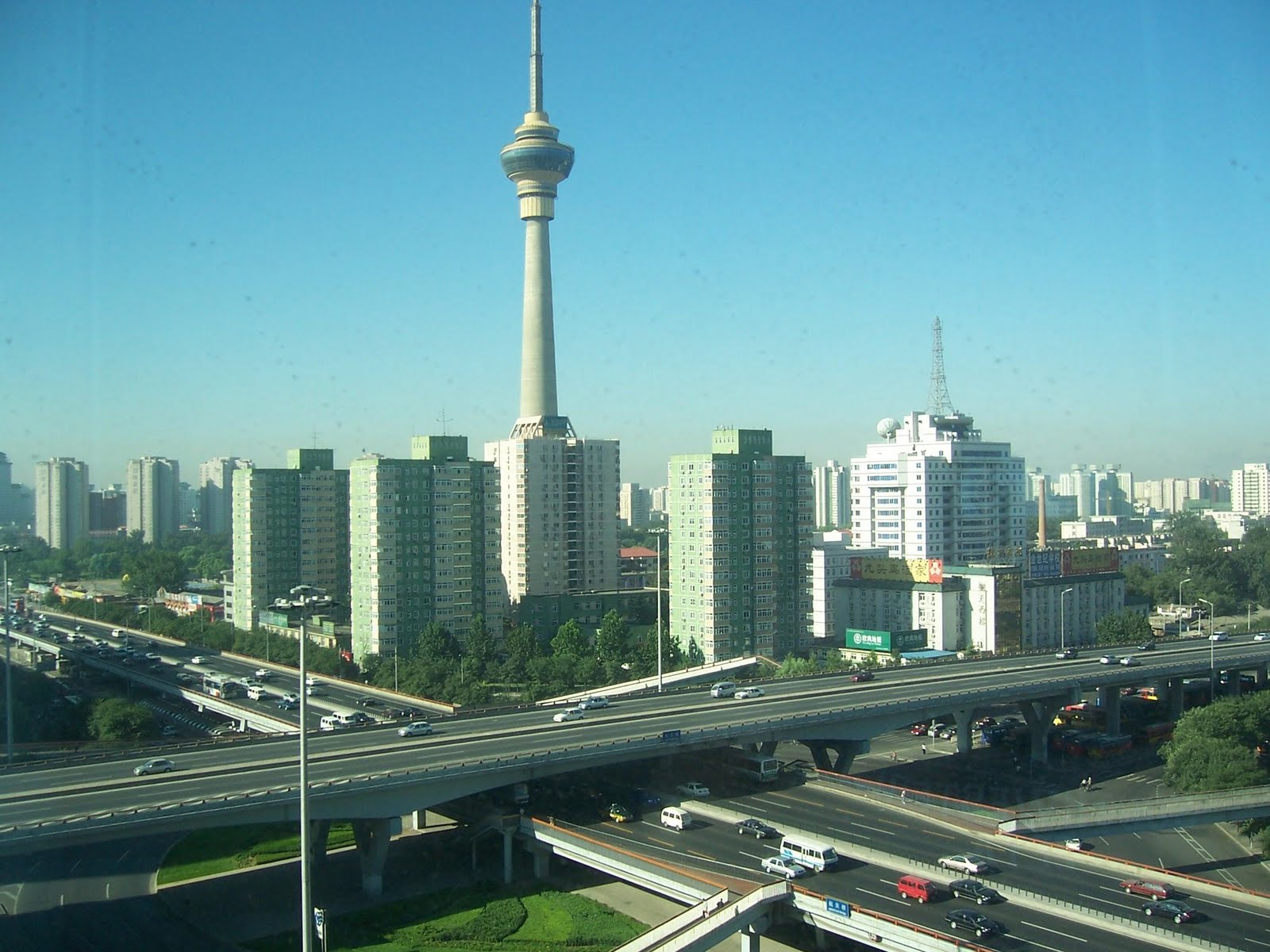 1. Changing symbols, heroes and rituals: Mao is no longer the national hero, now perceived more as an honored ancestor or quasi-religious icon (my interpretation). The term “comrade” has changed to mean partners in a homosexual relationship. Television programs hold competitions similar to “Idol” to elevate winners to cultural icons. Dr. Fang quotes Deng Xiaoping as saying “to become rich is glorious.”
2. Professionalism There is developing, among major enterprises, a strong service orientation.
3. Respect for knowledge
4. Self-expression
5. Direct and assertive communication
6. Individualism/individualization
7. Technology-driven
8. Emerging online civil society
Dr. Fang points out that in emulating many of the perceived values of the West, Chinese have not yet developed the inherent sense of social boundaries. As a result, certain “Western” behaviors in Chinese are perceived as excessive or out-of-bounds by Westerners. Dr. Fang asserts that there is a learning curve in this realm and that time and experience will bring the necessary corrections and definitions of proper boundaries.
I often go to the CIA World Factbook to get the most recently available information for any country in the world. Here are a few current demographics for China:
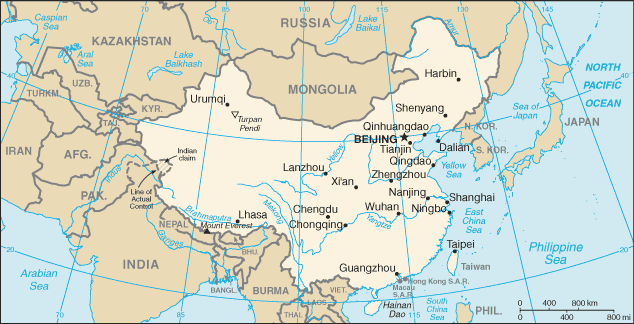
Population 1,338,612,968
Age structure 0-14 years: 19.8%, 15-64 years: 72.1%, 65 years and over: 8.1%
Median age 34.1 years
Population growth rate 0.655%
Urbanization urban population: 43% of total population
Rate of urbanization 2.7% annual rate of change
Sex ratio total population: 1.06 males/female
Life expectancy at birth total population: 73.47 years
Total fertility rate 1.79 children born/woman
Ethnic groups Han Chinese 91.5%; Zhuang, Manchu, Hui, Miao, Uyghur, Tujia, Yi, Mongol, Tibetan, Buyi, Dong, Yao, Korean and other, 8.5%
Religions Daoist (Taoist), Buddhist, Christian 3%-4%; Muslim 1%-2%. Note: [China is] officially atheist.
Languages Standard Chinese or Mandarin (based on the Beijing dialect), Yue (Cantonese), Wu (Shanghainese), Minbei (Fuzhou), Minnan (Hokkien-Taiwanese), Xiang, Gan, Hakka dialects, minority languages
Literacy (age 15 and over can read and write): total population: 90.9%
In ending his presentation, Dr. Fang characterized modern China as “embracing paradox, dynamics and change.” This is buttressed by the statement of Robert Poole, vice president, China Operations, at the US-China Business Council in Beijing: “Change is a constant companion to those of us in the China business environment, as the results of 30 years of reform unfold and a dynamic economy emerges.” The China Business Review, March-April, 2009.


 The Pavellas Perspective